An industrial drone with a nominal payload of 450kg might only have an actual usable payload of 280kg once equipped with a full set of batteries and operational equipment. This is not an isolated case—in the heavy-lift category, the gap between "maximum payload" and "effective payload" on the spec sheet is much larger than for small and medium-sized drones, and the cost of making a mistake is much higher.
The following five parameters must be verified item by item before procurement.
1. Payload is Just the Starting Point: Endurance, Wind Resistance, and Takeoff/Landing Modes Jointly Determine Usability
The core value of heavy-lift industrial drones is concentrated in three types of scenarios:
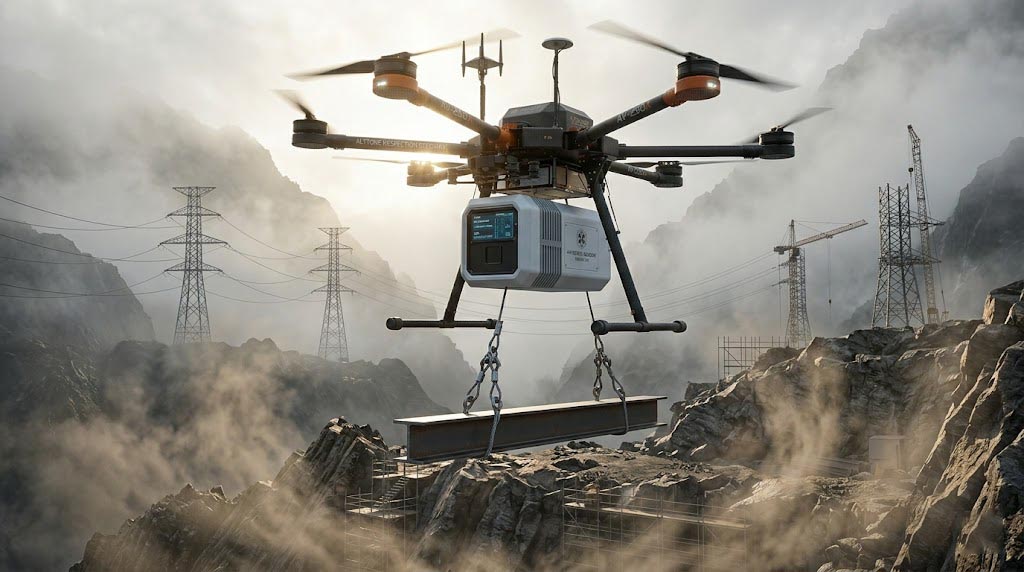
High-Risk Substitution: Lifting operations for high-voltage towers in mountainous areas and transporting hazardous materials in chemical plants, reducing human exposure.
Emergency Delivery: Rapid delivery of relief supplies at disaster sites, offering more flexible deployment than helicopters.
Specialized Payloads: Carrying heavy surveying or communication equipment for prolonged high-altitude operations.
However, the most common trap during procurement is looking only at the nominal maximum payload without considering the conditions under which this number was tested. For instance, a model with a nominal 450kg payload might only have about 280kg of actual usable payload after installing the battery pack—the difference is consumed by the structural dead weight and power system quotas. This type of parameter reporting is not uncommon in the heavy-lift sector.
The payload parameter must be evaluated alongside endurance. For the 450kg class, an effective single operation time of less than 1 hour means most tasks cannot be completed in a single sortie—splitting a task into two trips instantly doubles the fuel/power consumption and time costs.
2. Maximum Payload ≠ Effective Payload: Three Sources of Loss
Maximum Payload: Usually refers to a theoretical value under extreme conditions—no wind, new batteries, and all non-essential components removed.
Effective Payload: The actual weight that can be allocated to mission equipment after including essential accessories like batteries, sensors, and lifting gear.
Taking a common six-rotor heavy-lift structure as an example, there is a triple superposition of loss:
For every 1kg increase in payload, endurance decreases by approximately 2-3 minutes.
For every 1 level increase in wind resistance rating, usable payload drops by 15%-20% (power is consumed by stability control).
For VTOL (Vertical Takeoff and Landing) models, the extra energy consumption during the transition phase typically results in a lower effective payload compared to pure multi-rotors of the same class.
When requesting data from suppliers, do not just ask for the maximum payload. Demand "measured payload data with a full suite of operational equipment," including the battery model, sensor list, and test environment conditions.
3. Why Prices Differ by Three Times for the Same Nominal 450kg Payload
Comparison DimensionEconomic ModelEngineering GradeStructural MaterialsAluminum alloy frameCarbon fiber / Titanium alloy compositesWind ResistanceLevel 5Level 7 and abovePositioning AccuracyMeter-levelCentimeter-level
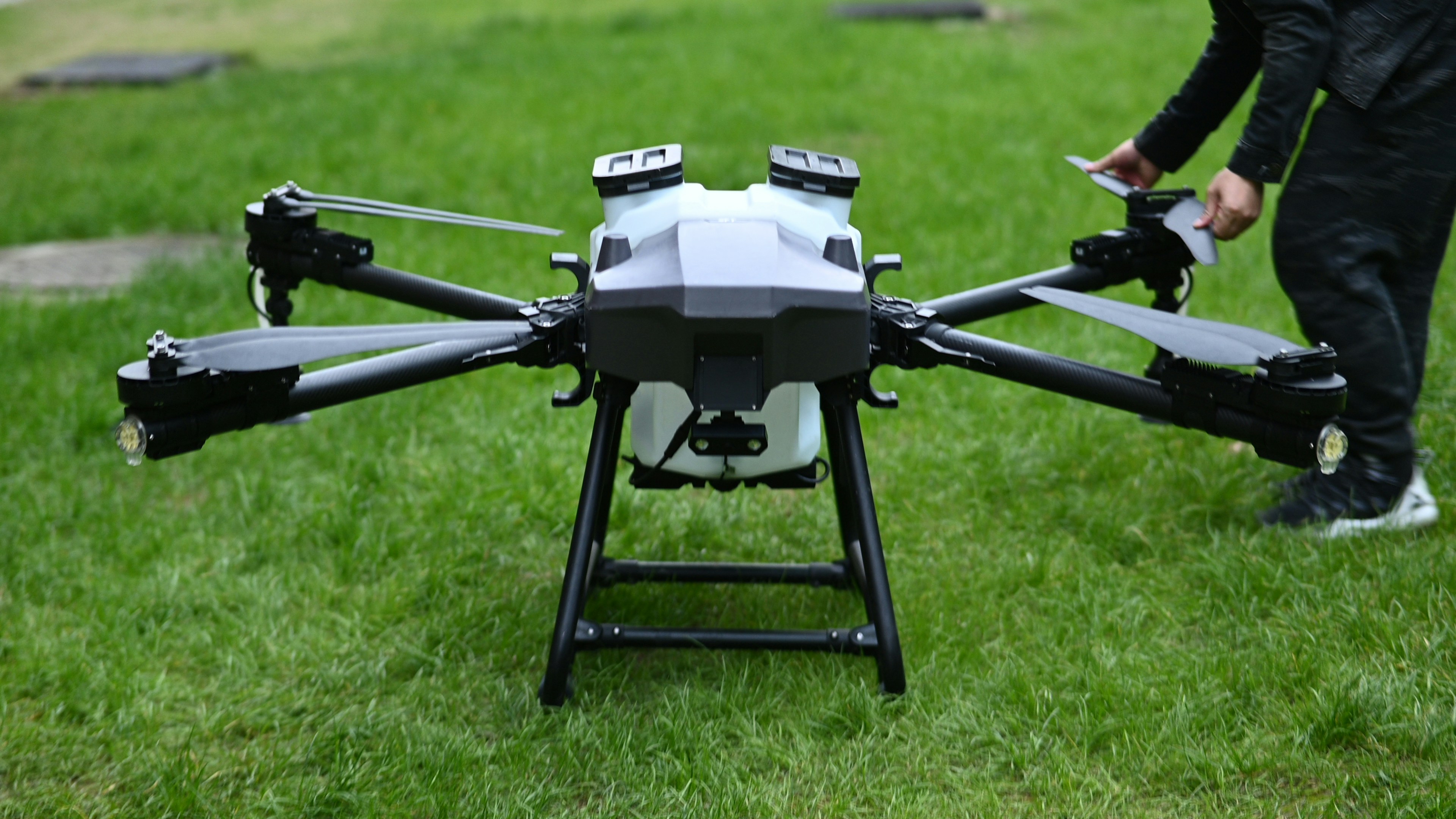
The bulk of the price difference lies in redundant designs: dual batteries, dual flight controllers, and broken-propeller protection. In surveying scenarios, these might be overkill, but in firefighting scenarios, they form the baseline of safety. Agricultural scenarios operate on an entirely different selection logic: the value of quick-release pesticide tanks, anti-corrosion motors, and terrain-following algorithms far outweighs the material grade.
DJI has established a mature "airframe + third-party payload" ecosystem for its Matrice and Agras series in the small-to-medium payload segments, where PSDK interface standardization has lowered accessory adaptation costs. However, in the 450kg class, the industry has yet to form similar universal interface standards. Each manufacturer's mounting protocols and mechanical interfaces are proprietary. When selecting a model, the lock-in cost of the accessory ecosystem must be factored into the total budget.
True cost-effectiveness is found in the "minimum reliable configuration" that matches the use case—not in picking the prettiest line on a spec sheet.
4. Beyond the Main Aircraft: Three Major Supporting Systems
The most easily underestimated supporting expenditures for heavy-lift models:
Energy System: A single battery pack has a cycle life of about 200 times, degrading faster under full-load conditions. Field operations require mobile charging stations; otherwise, the operational window is limited by the volume of batteries transported.
Obstacle Avoidance System: The heavier the payload, the greater the inertia, leading to an exponential increase in braking distance. Millimeter-wave radar is more reliable than visual-based solutions in dusty, rainy, or foggy conditions.
Ground Control Station: Heavy-lift operations must be monitored in real-time by a ground station for center-of-gravity shifts. Manual operation cannot detect dynamic center-of-gravity changes caused by the payload swaying in flight, leaving no decision window during sudden wind shear.
The budget for supporting systems should typically account for 30%-50% of the main aircraft's price. A procurement plan that skips this part is incomplete at the execution level.
5. Maintenance Cycles for Heavy-Lift Models
The heavier the payload, the more severe the stress cycles on transmission and structural components. The maintenance requirements are completely different from those of small and medium-sized drones:
Propellers: Check dynamic balance every 50 takeoffs and landings. Internal cracks in carbon fiber blades are invisible to the naked eye and require UV light inspection.
Motors: Replace bearing grease in brushless motors every 100 hours of operation. For water-cooled motors, pay extra attention to the freezing point of the antifreeze—the risk of freezing and cracking after shutting down in the field during winter is real.
Structural Components: Check folding joints weekly for wear. All fastening screws must use thread-locking fluid to prevent loosening; standard torque tightening is insufficient under full-load vibration conditions.
Formulating a maintenance plan based on flight hours is more scientific than basing it on calendar time—sitting idle does not generate stress wear.
A 450kg payload industrial drone is essentially an aerial engineering platform, not a scaled-up version of a consumer product. When selecting a model, concurrently verify the control distance, payload interface standards, and ground station compatibility—these three points are just as important as the payload number itself. For teams with the means, it is recommended to first run through actual operational parameters via a rental before making a procurement decision based on real-world data.