Drone OEM/ODM Customization Guide for Exporters: From Model Selection to Prototype
After years in this business, the first message overseas customers send on WeChat is almost always: "Can you do white-label?" Then as we talk more, I find most people mush OEM, ODM, white-label, and private-label into one blurry pile. This article breaks it all down — no jargon, just how we actually work with distributors in the Middle East and Africa.
Key Figures
- Global drone market (OEM + aftermarket) ~$26.1B in 2025, projected ~$40.6B by 2030, CAGR 9.2% (Source: MarketsandMarkets, 2025 report)
- China accounts for 70%+ of global civilian drone production (Source: Statista industry data citation)
- In the APAC commercial drone market, OEM direct-procurement share ~65.7% in 2025 (Source: Market Data Forecast)
- White-label MOQ can be as low as 20 units/model; private label commonly starts at 100 (Source: vendor public materials; specific thresholds to be verified manually)
- Standard OEM from prototyping to mass production generally 45–60 days; ODM full new R&D ~4–6 months (Source: vendor public FAQ)
- EU CE-RED certification ~$3,000–6,000, 3–5 weeks; US FCC ~$3,000–8,000 (Source: logistics compliance vendor quote range, 2026)
- US mandatory Remote ID since March 2024; drones without compliant identification can be detained at customs (Source: FAA / CBP operational guidance)
1. First, clarify: do you want OEM or ODM?
Here's an analogy. White-label is like grabbing a ready-made phone from a wholesale market and just slapping your own sticker with the logo — fastest, cheapest, but the same machine might be all over the street. OEM (contract manufacturing) is where you hand the factory your spec sheet, and the airframe, payload, and flight-control parameters follow your requirements; the factory only assembles and tests. ODM (original design manufacturing) goes a step further: the model itself is drawn from scratch by the factory, and the drawings and IP can be written into the contract and transferred to you.
Most distributors just starting out test the water with white-label or light OEM, then go deeper once sales move. We did a Middle East & Africa drone market analysis — more players there want their own label, but the ones who actually absorb private-label volumes are those who've already built their channels. If you want to act as a local agent, you can also look at our Middle East & Africa distributor program.
2. How deep can export white-label customization actually go?
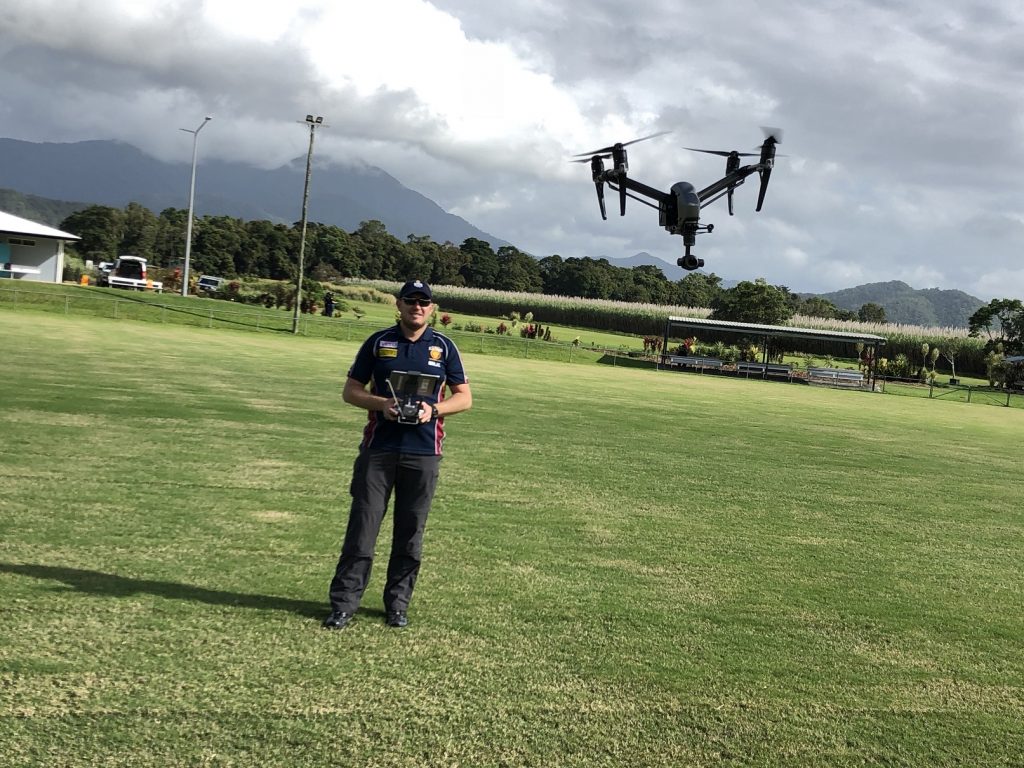
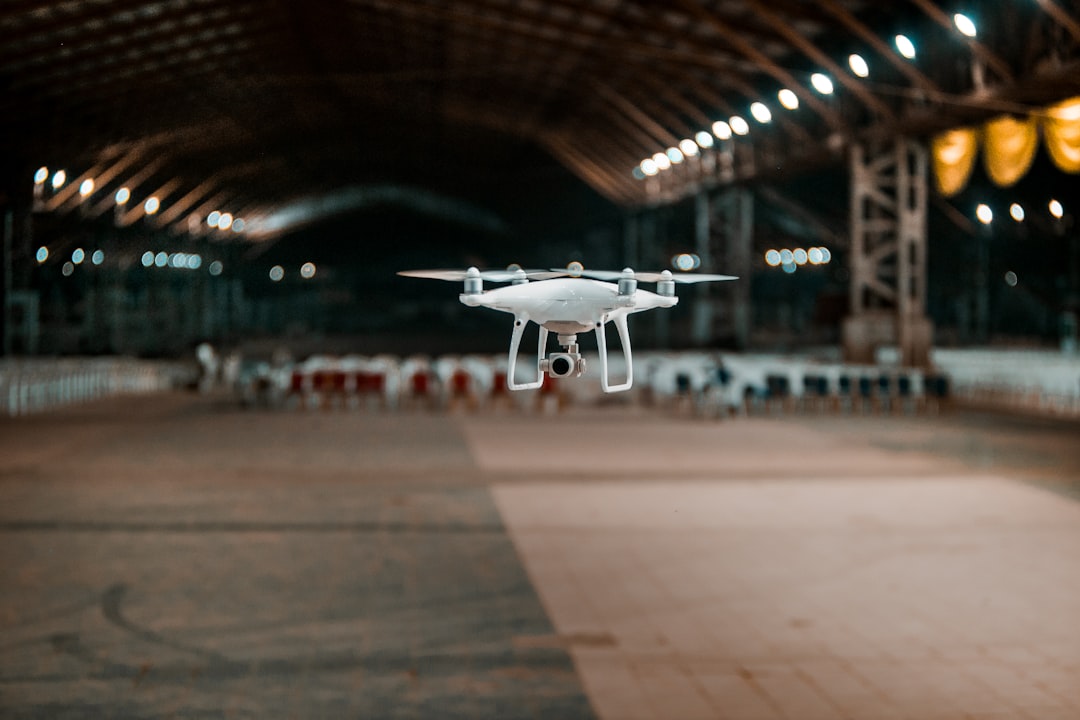
First, a sense of what we make: our flagship products are FPV (first-person-view) civilian drones, several thousand RMB each, professional-grade — not a few-hundred-yuan toy. So when we talk about "how deep customization can go," we're speaking from the angle of professional buyers and distributors, not putting stickers on consumer toys.
Don't be fooled by the words "full customization." The layers you can actually touch are just these:
- Appearance layer: airframe color, logo, packaging, manual — lowest cost, doable even with white-label.
- Payload layer: For FPV drones, the most valuable payload is the camera and lens — wide-angle or zoom, image-transmission clarity, night-vision capability, all configurable to your scenario. We specialize in FPV models, and the camera module is where customization makes the biggest difference.
- Flight-control layer: route logic, return-to-home altitude, no-fly zones — these parameters can be tuned to the target country's regulations.
- Software layer: your branded companion App and ground-station interface, with backend data landing on your own server.
Bottom line: the airframe structure and core flight-control layer generally stay fixed; what moves is "the layer that grows on your requirements."
3. Step one in selection: define the scenario before the model
This is the easiest step to trip on. Lots of people ask "what's your cheapest model" right away, then think about what to sell it for. The right order is reversed: let the scenario drive the model.
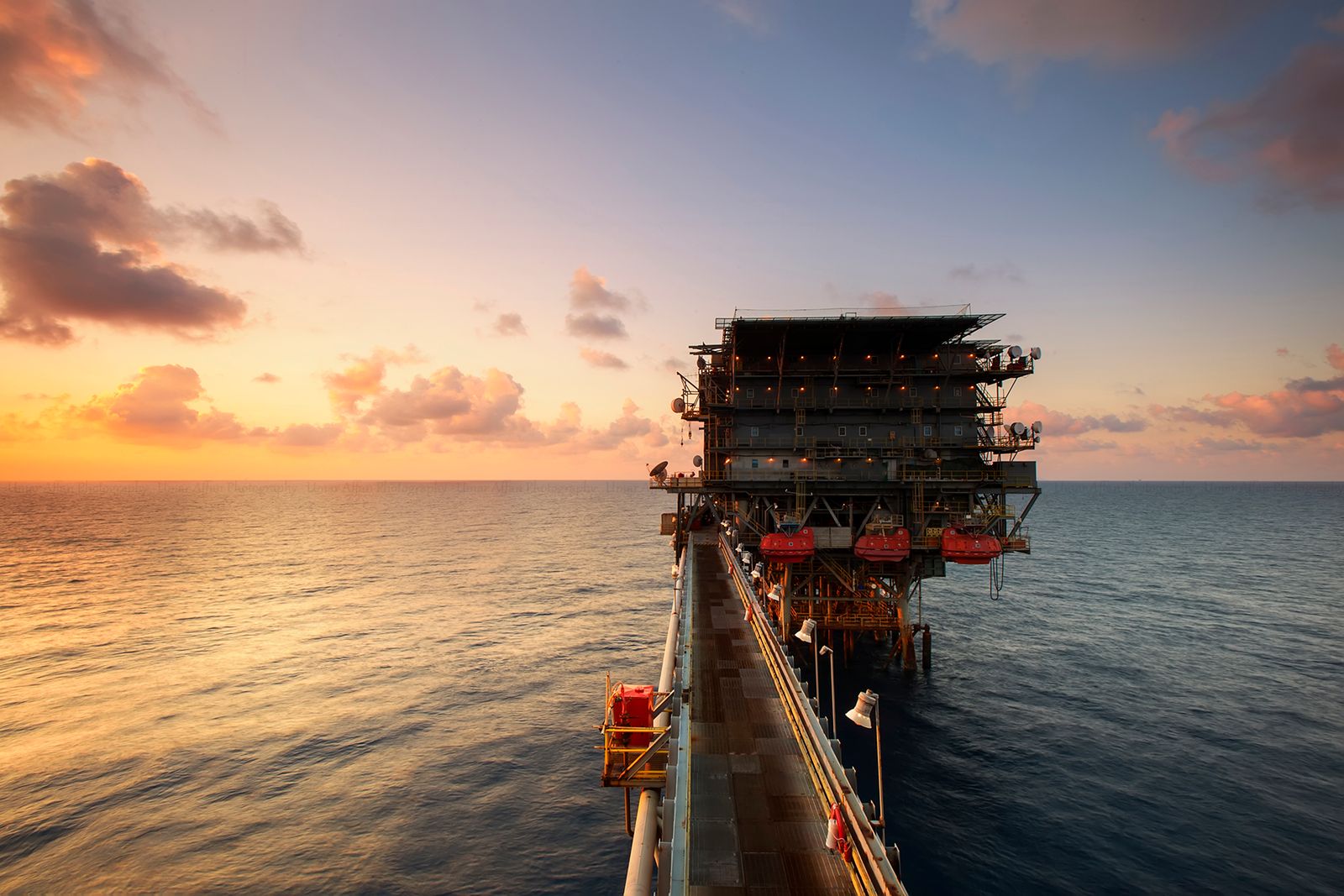
Those doing oil & gas pipeline desert inspection need wind resistance, long endurance, thermal imaging. Those doing aerial surveying and facility inspection need image-transmission distance, camera resolution, and stabilization. Without a scenario, the model is a blind pick. When we talk requirements with customers, the first half hour is basically asking "what exactly is this machine going up to do," not "how many units do you want."
4. Payload customization: how to spec the camera and lens
Our flagship is FPV drones, and the most valuable payload on this type of machine is the camera and lens — also the easiest place to differentiate in white-label. Same airframe with a wide-angle lens is a big-scene aerial platform; with a zoom lens it can see distant detail; with a night-vision module it handles low-light work.
One rule in customization: the camera module, image-transmission link, and stabilization method are set by your target scenario. Write "what to shoot, how far to transmit, night or not" clearly in the requirements table (Chapter 9), and prototyping rework drops. Our FPV models are designed with the camera as the core payload, so the customization headroom is far larger than a typical toy drone.
5. Prototyping flow: from requirements table to first-flight validation
A smooth flow looks roughly like this:
- Requirements confirmation: you list scenario, model, payload, and target-market certifications in one table (template in Chapter 9).
- Design & prototype: factory produces CAD, a mock-up, or a first-flight prototype.
- Testing & certification: wind tunnel, hover, anti-interference tests, plus CE, FCC, etc.
- First-flight validation: fly it in a real scenario; if it fails, fix it.
- Mass production: after finalization, it goes to the line.
Light OEM is basically done at step 2; ODM has to walk all of 1–5, so the cycle differs by multiples.
6. MOQ and lead time: volume and cycle of white-label orders
Rough industry ranges (vary a lot by factory; specifics per contract, verify manually):
- White-label: 20 units/model to start, good for testing the market.
- Standard OEM: common threshold around 100 units; prototyping to shipment 45–60 days.
- Private label / ODM: often only worthwhile at the 1,000-unit level; full new R&D 4–6 months.
A reality: among buyers who started white-label in 2024–2025, over 60% had converted to private label by 2026 (Source: SourcifyChina 2026 procurement report) — because white-label hardware is similar across the board and price gets cut to the bone. So don't look only at upfront cost for MOQ; think whether you want "list first" or "build a moat."
7. Certification & compliance: the gates for export drones
This is the part you can least skip — skip it and the goods stall at customs. By target market:
- EU: the CE mark is a hard gate, covering the RED radio directive, EMC electromagnetic compatibility, LVD low-voltage, and RoHS — four items. CE-RED alone is roughly $3,000–6,000 and 3–5 weeks.
- US: FCC is mandatory for radio modules, $3,000–8,000 and 3–5 weeks; also, Remote ID has been mandatory since March 2024, so the aircraft must broadcast its identity or risk detention at customs.
- Battery: lithium batteries go as dangerous goods under UN38.3 testing; above 100Wh air shipping is restricted, above 300Wh basically only sea-freight dangerous-goods containers.
- Middle East: Saudi SASO and UAE ESMA / GCA / DCA each have requirements; align certification before import clearance, don't wait until the goods arrive.
Certification should be front-loaded into the R&D stage; retrofitting tests after the model is finalized multiplies rework cost.
8. Pitfalls: the 4 most common mistakes in white-label customization
- White-label clone conflict: stats say over half of white-label drones in 2025 share identical hardware with three or more competitors (Source: Fobsourcify 2026 procurement guide). Fix — sign a regional exclusive contract so the same machine isn't fighting you in your own territory.
- IP not clarified: white-label suppliers usually hold the core IP; you only get labeling rights. ODM must write ownership transfer into the contract. Verbal promises don't count.
- Certification lag: as above, retrofitting after finalization is the most expensive.
- Unclear after-sales boundary: one more word on this. In white-label deals, what the factory side provides is factory QC, technical docs, spare-parts list, and remote technical support. Overseas local repair outlets and on-site warranty must be set up by the distributor or a third party — don't promise customers "local quick repair, long-term warranty" in the contract that you can't deliver locally. Writing the boundary clearly actually means fewer disputes.
9. A requirements-table template you can copy
Before sending requirements to a factory, fill in these points and communication efficiency doubles:
- Target scenario and operating environment (desert / coastal / plateau?)
- Desired model and payload capacity, endurance floor
- Payload and camera requirements (wide-angle / zoom / night-vision? image-transmission distance, resolution floor?)
- Target market and mandatory certifications (CE / FCC / Remote ID / SASO / ESMA?)
- MOQ and expected lead time
- Brand elements (logo, color, packaging, manual language)
- Software requirements (App branding, data ownership, ground station)
The more detailed the table, the less prototyping rework.
10. FAQ: Common Questions
Are white-label drones and private-label drones the same thing?
No. White-label takes the factory's ready-made model and only changes the logo and packaging — the shallowest customization. Private-label (OEM / ODM) can touch hardware, flight control, and software to your needs — a big difference in depth.
Which fits a distributor just starting out, OEM or ODM?
Start with white-label or light OEM to test the water; move to ODM once channels are proven. ODM's R&D cycle and MOQ are both high — suited to players who've already built sales volume.
What's the typical MOQ? Can small batches go first?
White-label starts at 20 units/model; standard OEM commonly at a 100-unit threshold. Small-batch market testing is entirely feasible; specific thresholds per factory quote, verify manually.
What certifications for exporting to the Middle East?
Saudi goes through SASO, UAE through ESMA / GCA / DCA, and radio and EMC items must be covered. Align certification before import clearance — see the Saudi and UAE regulatory guides.
How long does prototyping take? Can the design change mid-way?
Light OEM prototyping to shipment is 45–60 days; ODM full new R&D ~4–6 months. Changes are cheap before design finalization; after the production line opens, they get expensive.
How does after-sales and warranty work for customized drones?
The factory side typically provides factory QC, technical docs, spare-parts list, and remote technical support; overseas local repair and on-site warranty are arranged by the distributor or a third party, per contract. We don't promise "local quick repair, long-term warranty" we can't deliver — a clear boundary saves both sides trouble.
Want to turn your requirements into a white-label drone? Contact us for a free model-selection assessment — send over the Chapter 9 requirements table and we'll map out the model and certification path by your target market first.