If you are entering the Middle East drone market, the UAE is unavoidable — the Gulf's aviation hub, host of the Expo and countless large events, with market size and willingness to pay at the top of the region. But many manufacturers get lost on first contact: one country, two separate drone regulatory systems. Dubai has its own authority; the other six emirates answer to another. Registration portals, flight maps and fine schedules are all different.
And there is more: the rules have shifted almost every year for the past three. A nationwide recreational ban started in early 2022 and lasted three years; pilot licensing and Remote ID became mandatory in 2024; recreational flying reopened in early 2025 with all previously issued registration certificates voided; and in the first half of 2026 all drone operations were temporarily suspended due to the regional airspace security situation. Entering the UAE market with a year-old playbook is a reliable way to get burned.
This guide walks through the regulatory changes of the past three years, who can fly, how to register, how commercial operations get licensed, how to bring equipment through customs legally, why Dubai is special, and where the fine lines sit. Exporters and distributors should pay extra attention to the import compliance and commercial path sections.
Updated September 2026, based on publicly available GCAA/DCAA material. Regulations change frequently — always confirm with official platforms.
Key facts first (a quick read on whether this guide is for you):
- UAE drone regulation is split in two: GCAA covers the six emirates other than Dubai, DCAA covers Dubai only
- All drones must be registered regardless of weight (GCAA's own wording — even sub-250g units are not exempt)
- Since 2024 pilots must hold a UA pilot licence (a training certificate alone is no longer enough), and Remote ID must be active throughout flight
- Commercial operations run in two steps: UOA operator authorisation (~3 weeks) → per-flight operation permission (red zone, 14 working days)
- Imports require an MOIAT Letter of Conformity (LOC) or Product Status Statement (PSS) — without the paperwork, customs will hold the shipment
- A nationwide suspension ran from February to June 2026; industry reports say commercial operations have resumed, but confirm the current status with GCAA/DCAA before any flight
- Fines for unregistered flight start at AED 50,000–500,000 under Federal Decree-Law Article 16; unlicensed possession can reach AED 2,000,000
Why the UAE Is Worth the Effort
The UAE is the lighthouse of the Middle East drone market — oil & gas, logistics, media and urban security all run drones, and both willingness to pay and compliance awareness are the region's highest. When the federation reopened recreational flying in January 2025, it received 300 individual and 93 company applications within two days (The National, citing the GCAA) — the demand is real. For exporters and distributors, the UAE carries two unique values:
- Demonstration effect: win a UAE client and you hold a trust endorsement for the whole Gulf market (Saudi and Qatari buyers reference UAE deployments)
- Regulation first: the UAE was the first Gulf country to systematise drone regulation — a product that clears compliance here will enter other Gulf markets faster (for Saudi Arabia, see our Saudi drone regulations guide; the regional picture also appears in our Egypt guide and the Nigeria import guide)

Who Regulates You: the GCAA / DCAA Dual System
UAE drone oversight is "one country, two systems" — first work out whose turf you are on:
| GCAA (General Civil Aviation Authority) | DCAA (Dubai Civil Aviation Authority) | |
|---|---|---|
| Jurisdiction | The 6 emirates other than Dubai (Abu Dhabi, Sharjah, etc.) | Dubai only |
| Registration portal | My Drone Hub app / drones.gov.ae | Separate DCAA portal |
| Flight maps | Its own green/red zone map | Its own map (stricter) |
| Recreational flying | Reopened January 2025 (green zones) | Suspended, no reopening date |
Beyond the two authorities, commercial operators also meet three federal agencies: MOIAT (Ministry of Industry and Advanced Technology) handles product conformity and import approval, TDRA handles radio spectrum, and the Ministry of Interior with the Cybersecurity Council handle security reviews for camera equipment. More on that in the import section.
In one line: confirm which emirate you are in, then register with the matching authority. The two do not substitute for each other — Dubai does not accept a GCAA registration in place of DCAA approval.
[The dual-system overview is based on 2026 public material from the GCAA (gcaa.gov.ae), the DCAA (dcaa.gov.ae) and the registration portal drones.gov.ae — verify before relying on it.]
2024–2026: Three Years of Regulatory Change
This is the part most older guides miss, and the core of this update. UAE drone rules have moved almost every year:
| When | What changed | What it means for you |
|---|---|---|
| Jan 2022 | Nationwide recreational drone ban (lasting about three years); Federal Decree-Law No. 26 issued, replacing the old rule patchwork | Every pre-2022 guide is dead |
| Jan 1, 2024 | UA pilot licence becomes mandatory (training certificates no longer sufficient) + Remote ID mandatory (aircraft must broadcast identity and position) | Staff need licences; purchased aircraft must support Remote ID or take an add-on module |
| Jan 7, 2025 | Federation reopens recreational flying — only in the six emirates other than Dubai; all previously issued registration certificates are voided with no grandfathering | Recreational flying outside Dubai only; old certificates must be re-issued |
| Feb–Jun 2026 | Due to the regional airspace security situation, the GCAA suspended all drone operation authorisations (commercial and recreational alike), later widened | Project approvals froze during this window; unexecuted permits issued before the suspension must be re-applied for |
| Mid-2026 to date | Industry reports say commercial operations have resumed; the GCAA has issued no specific lifting notice, and its last public position remains the suspension | Confirm the current status through official channels before flying — do not rely on second-hand guides |
One more note on the 2026 suspension: it stemmed from the regional airspace security situation and was a temporary administrative measure, not a sign that the UAE is tightening drone policy for the long term — the regulatory framework itself did not change during the suspension, and the original framework applies once operations resume. The scheduling impact, though, is real: when you promise delivery timelines to UAE clients, always leave margin for policy swings.
The Recreational Path (for private users and demos)
The bar for recreational flying has risen sharply since 2024. The full chain is training → licence → Product Status Statement → registration:
- Training first: complete certified training at a GCAA-accredited academy (around Dubai: Sanad Academy, Exponent and others; check the accredited list on the GCAA platform)
- Get the licence: since January 1, 2024 a training certificate alone is not enough — you must hold a UA pilot licence issued by the GCAA or a local authority
- Get the Product Status Statement (PSS): issued by MOIAT, about AED 200 and 2–3 working days (a prerequisite document most guides never mention)
- Then register: submit via UAE Pass on the My Drone Hub app or drones.gov.ae (requires an Emirates ID); security clearance takes about 3–4 weeks
- Get the certificate: recreational registration costs about AED 120 (AED 100 registration + 10 knowledge fee + 10 innovation fee); permits for drones up to 5kg are valid for 2 years
Recreational limits (where most people trip):
- Green zones only (check the live map in the app; within 5km of airports and over crowded areas are all no-fly)
- Daylight, good weather, within visual line of sight, below 400 feet (120m)
- Up to 5kg, no drop or release devices; cameras and audio-recording equipment are banned under recreational rules — most guides get this backwards: aerial photography is not a matter of "an extra review", it is simply prohibited in the recreational category. To shoot, take the commercial path
- Above 5kg or with a combustion engine: GCAA-approved flying clubs only
- Mark the registration number permanently on the airframe (marker, label or engraving); deregister with the GCAA when selling or retiring the aircraft
- Report any accident or loss of control to the GCAA hotline or local police immediately
Note: tourists have no Emirates ID and cannot register — a drone brought in transit must be declared and checked in, never flown. The import section below covers this further, because customs is an even harder gate than registration.
The Commercial Path (exporters and distributors, read this)
Commercial drone operations in the UAE run on a two-step approval — neither step can be skipped:
Step 1: UOA (Unmanned Aircraft Operator Authorisation)
- Security review by the GCAA AVSEC section (mandatory for camera/recording equipment)
- Operator registration letter on company letterhead
- Subscription to the GCAA E-Publications service (AED 1,200/year)
- Application fee AED 1,500 per application (an AED 1,200 figure also circulates — confirm against the GCAA quote [needs manual verification])
- About 3 weeks (with complete paperwork)
Step 2: per-flight operation permission
- A UOA does not mean you can fly freely: every flight in a red zone requires a separate application
- Camera/video-streaming operations add another AVSEC security review
- About 14 working days
- 24–48 hours before flight, submit a flight notification through the GCAA SkyDome system (coordinates, altitude, time window, aircraft type, pilot licence number)
Additional requirements for commercial operations:
- Minimum AED 1,000,000 third-party liability insurance (per aircraft)
- Pilots hold a UA pilot licence (RPL): GCAA-accredited training + medical + exams, training from about AED 5,000
- A physical commercial licence (free zone or mainland) with drone activities in scope
- Each commercial aircraft individually registered and linked to the operator authorisation
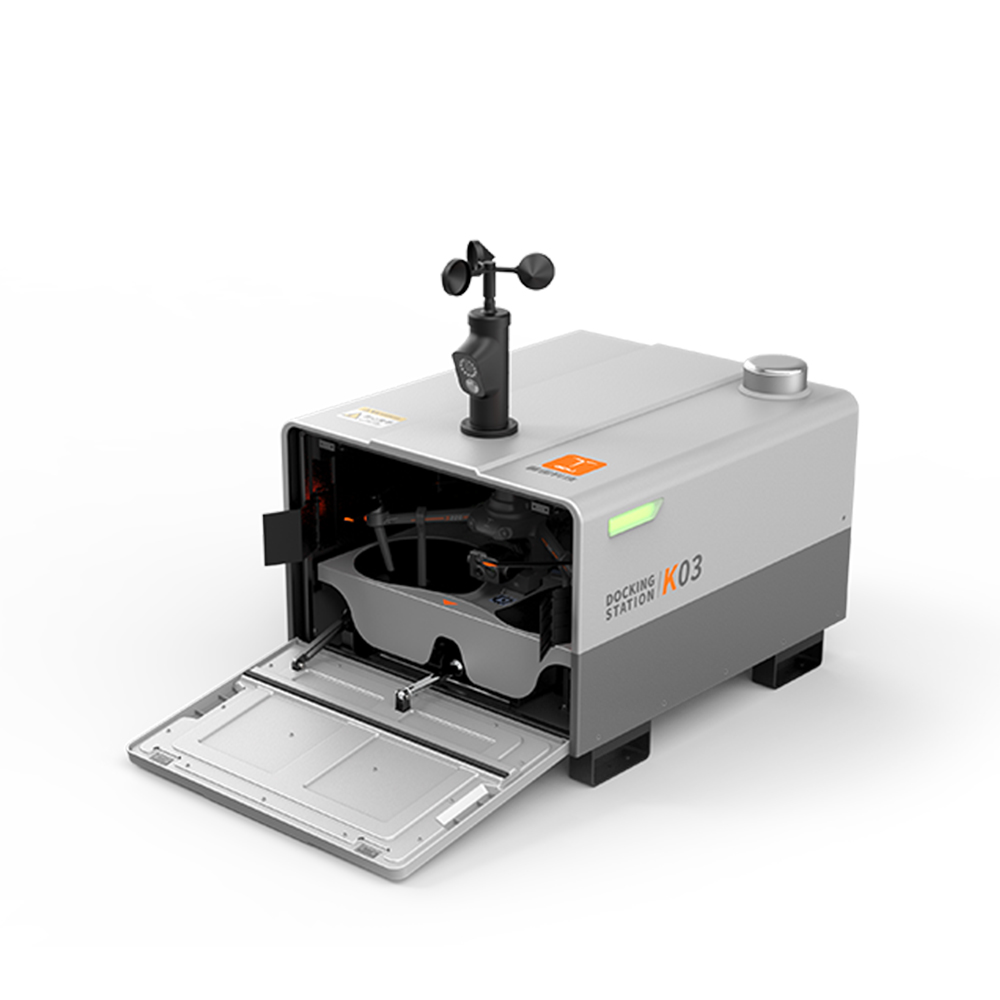
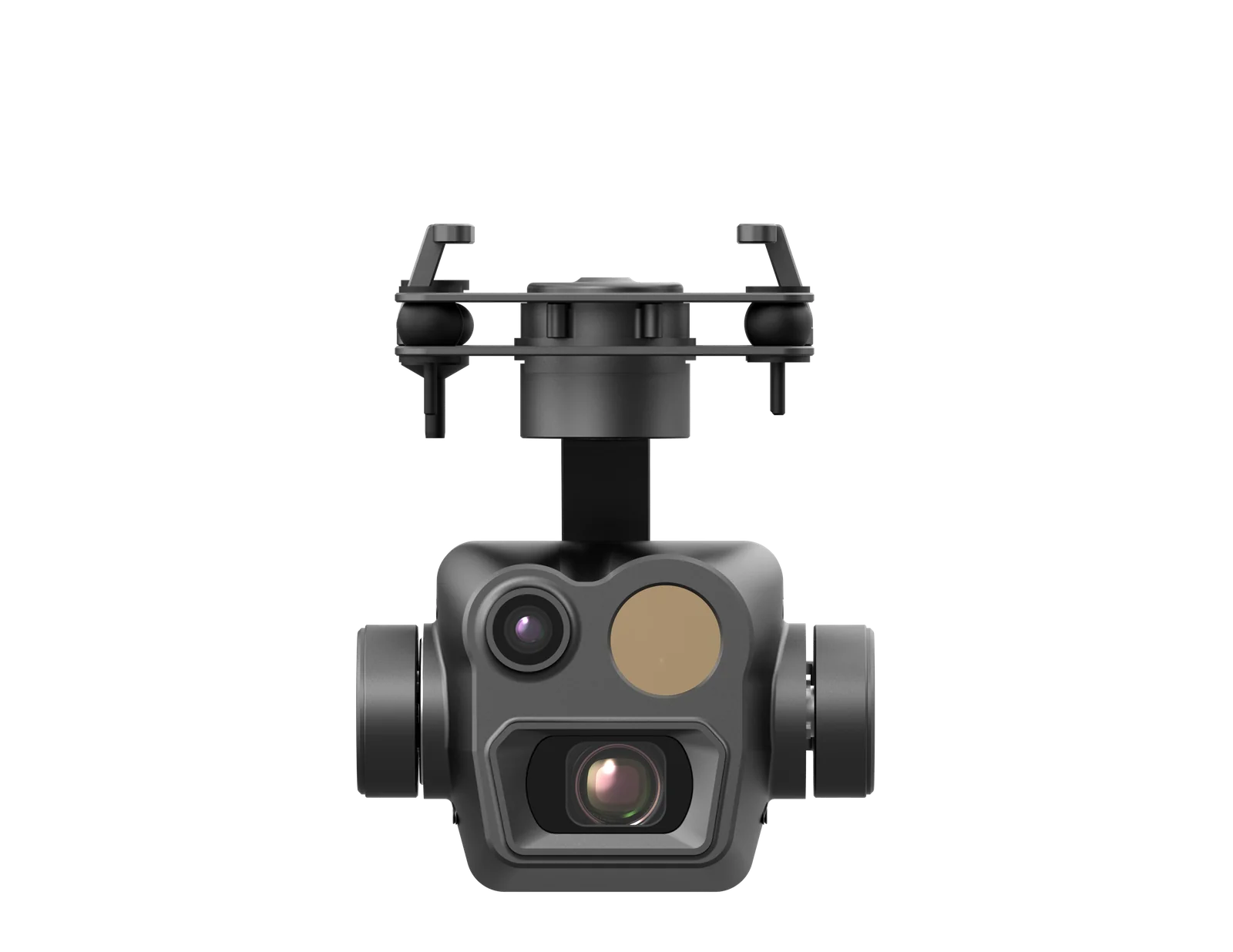
Practical advice for exporters and distributors: the UOA licenses the "person/company", the operation permission licenses "each flight" — build "3 weeks authorisation + 2 weeks approval" into the client's procurement plan, and never promise "flying next week". Oil & gas and security projects across the UAE commonly run drone-in-a-box docks for unattended inspection and AI tracking gimbal setups — these follow exactly the same commercial compliance chain; the equipment itself grants no exemption.
Import Compliance: Clear MOIAT Before Your Shipment Clears Customs
This is the most underestimated and least systematically documented part of the UAE market. Since November 2023, Cabinet Resolution No. 110 has put drones (along with accessories and even toy drones) on the restricted import list — without the paperwork, the shipment is held at the port. The chain has three links:
1. Obtain the MOIAT Letter of Conformity (LOC) or Product Status Statement (PSS)
- Before import or display, products must carry a MOIAT-issued Certificate of Conformity (renewed every 3 years); products already in the country can obtain a Product Status Statement (PSS, about AED 200 and 2–3 working days)
- Required submissions: manufacturer and model information, serial numbers, weight (with and without payload), battery specifications, radio frequencies, camera/sensor configuration — compile this into a checklist before shipping and you will save rounds of back-and-forth
2. Labelling and tracking systems
- Products must carry a serial number plus an official label, marked at minimum in Arabic and English
- The aircraft must carry a tracking/data-transmission system approved by the Cybersecurity Council and TDRA — confirm at selection stage that the equipment can take the approved tracking module, or it will not clear customs
3. Customs practice
- Release requires a valid PSS or LOC; incomplete paperwork means the shipment is held
- If held, there are two paths: retrieve the drone when leaving the UAE within 30 days, or obtain a "non-operational custody permit" and store it in a bonded warehouse (storage fees at your cost)
- Dubai Customs scans luggage with AI-trained X-ray machines whose recognition was trained specifically on drone battery configurations — smuggling a drone in checked luggage has no success rate. Drone confiscations at Dubai Customs rose 32% year-on-year in the first half of 2024 (dronesgator, citing Dubai Customs)
- Spare parts may only be imported by licensed companies; modifications and major repairs require joint GCAA + MOIAT approval — unauthorised modification takes the product out of its certified state
What this means for manufacturers: Dubai airport's AI luggage scanning plus hold-without-LOC means "goods shipped to Dubai" and "people flying to Dubai" are two entirely different compliance paths. Equipment goes by freight with proper LOC/PSS documents; people should not carry complete aircraft into the country. Helping clients separate these two paths is itself a service value.
Why Dubai Is Special
Dubai is "a special zone inside a special zone" on drones:
- Recreational flying is suspended — when the federation reopened in January 2025 the DCAA explicitly did not follow, and no reopening notice has followed since; only DCAA-licensed commercial operators may fly
- Commercial operations stack a DCAA layer on top of the GCAA system: registration AED 500/year (issuing an RPAS registration card), plus a NOC per project
- Official NOC fees and timing (DCAA E-Service figures): single commercial NOC AED 1,500, event NOC AED 5,000, acceptance SLA about 1 working day; but flight permits must be applied for 14 working days in advance (48 hours in green zones), with Dubai Police security review plus written landowner permission
- Change of location = fresh application; height or sensitive-area exceptions go through DANS (Dubai Air Navigation Services), and filming work may add a Ministry of Defence review
What this means for manufacturers: Dubai clients need DCAA approvals before any project lands; goods into Dubai need the customs declaration, invoice and drone model list complete, or the client gets stuck at customs. One more reminder: Dubai's fine amounts are not published in official documents (the local regulation lists violations; amounts are set case by case) — do not quote the specific Dubai fine numbers circulating online; defer to DCAA/Dubai Police enforcement.
Fine Lines (at the level of the statute)
UAE drone penalties are among the strictest in the Middle East. Listed by statute — more reliable than the scattered numbers online:
| Violation | Penalty | Basis |
|---|---|---|
| Unregistered flight | AED 50,000–500,000 + confiscation | Federal Decree-Law No. 26 of 2022, Art. 16 |
| Unlicensed possession or purchase of a drone | AED 100,000–2,000,000 | Same law, Art. 17 |
| Flying without a licence | Up to 1 year imprisonment + AED 50,000 | Civil Aviation Law Art. 69 (quoted on the GCAA site) |
| Unmarked aircraft / entering restricted zones / refusing to land | Up to 3 years imprisonment + AED 100,000 | Civil Aviation Law Art. 70 (quoted on the GCAA site) |
| Filming classified / defence facilities | Up to life imprisonment + up to AED 3,000,000 | Penal code provisions |
| Filming a person without consent | Up to 6 months imprisonment; AED 50,000–500,000 civil | Privacy law |
Two enforcement details worth remembering: administrative penalties follow a ladder of "admonition → warning → suspension → revocation → confiscation", and there is a 30-day appeal window through the GCAA appeal channel.
In one line: in the UAE, flying a drone is never a "launch first, apologise later" affair — fines start at five figures in dirhams, and the ceiling is criminal liability.
Retrospective: The Four Traps Exporters Fall Into
Years of UAE market exposure point to four recurring failures:
- Signing work before the client has a UOA — the contract is signed, the flight permit never comes, the project dies, and the blame lands on the supplier
- Shipping to Dubai without MOIAT documents — since November 2023 this is no longer "might get checked", it is "no LOC/PSS, shipment held"; the first gate is now the MOIAT certificate, not tidy paperwork
- Mistaking training for registration, and registration for a licence — clients think "I did the course, I can fly"; the real chain is training → licence → PSS → registration → security review, and registration plus clearance alone needs 4–6 weeks
- Ignoring compliance attributes of the equipment — Remote ID, approved tracking systems, frequency-band compliance must be confirmed at selection; discovering at the port that the aircraft cannot take the approved tracking module makes re-shipping brutally expensive
BVLOS and Docks: the Next Step for UAE Commercial Drones
A policy direction worth watching: the UAE is moving toward routine BVLOS (beyond visual line of sight) operations, Dubai runs a drone delivery programme, the federation accepts BVLOS applications under the JARUS SORA risk-assessment framework, and a UTM (unmanned traffic management) system is under construction. For docks (drone-in-a-box) and unattended solutions this is a clear policy tailwind — but the precondition stands: these capabilities open only to licensed commercial operators, project by project. When pitching a dock solution, put "licensed operator + approval timeline" into the project plan with it — never imply "buy it and it flies itself".
The One-Line Summary
The UAE = two regulators (GCAA/DCAA) + two approval steps (UOA / operation permission) + one import gate (MOIAT certificate) + three years of back-to-back rule changes. Run the operating chain "training → licence → PSS → registration → UOA → operation permission" and the import chain "LOC/PSS → labelling → tracking system → customs" for your clients, and that is your differentiation. On the equipment side, products that support Remote ID, can carry an approved tracking module and stay under 5kg compete best in the UAE.
If you have a UAE project to land, send us the import category and client profile and we will put together a compliance and import document checklist organised around GCAA/DCAA requirements — equipment compliance consultation and document checks are free of charge.
FAQ
What permits do you need to fly a drone in the UAE?
Two tracks: recreational flying needs GCAA-accredited training + a UA pilot licence + an MOIAT Product Status Statement + registration (about AED 120) + security clearance (3–4 weeks), green zones only; commercial operations need UOA operator authorisation (about 3 weeks) plus a per-flight operation permission (red zone, 14 working days).
What is the difference between the GCAA and the DCAA?
The GCAA covers the six emirates other than Dubai; the DCAA covers Dubai only, with separate registration portals, flight maps and fee schedules — neither substitutes for the other. Register with the authority of the emirate where you fly.
Can tourists fly drones in the UAE?
No. Registration requires an Emirates ID, which tourists cannot obtain; a drone brought in transit must be declared and checked in, never flown. Dubai Customs scans luggage with AI X-ray machines and undeclared drones are confiscated.
How much does drone registration cost in the UAE?
Recreational registration is about AED 120 (including the knowledge and innovation fees), with permits for drones up to 5kg valid 2 years; the commercial UOA is AED 1,500 per application plus the AED 1,200/year E-Publications subscription; pilot licence training starts around AED 5,000; commercial operations require minimum AED 1,000,000 third-party liability insurance. Total commercial compliance budget typically exceeds AED 10,000.
How do you import a drone into the UAE?
Before import or display, obtain a MOIAT Letter of Conformity (LOC, renewed every 3 years) or a Product Status Statement (PSS, about AED 200 and 2–3 working days); the product carries a serial number and an Arabic-English label and mounts an approved tracking system; customs releases shipments against valid documents and holds those without. Spare parts may only be imported by licensed companies, and modifications require joint GCAA and MOIAT approval.
Can you fly a drone in Dubai?
Recreational flying is suspended (Dubai did not follow the January 2025 federal reopening and has announced no date since); only DCAA-licensed commercial operators may fly. Commercial projects must complete DCAA registration (AED 500/year) on top of the GCAA system, plus a per-project NOC (single commercial NOC AED 1,500, applied for 14 working days in advance).
What was the 2026 UAE drone suspension?
In late February 2026, due to the regional airspace security situation, the GCAA suspended all drone operation authorisations (commercial and recreational alike), later widening the suspension. Industry reports say commercial operations resumed mid-year, but the GCAA has issued no specific lifting notice — confirm the current status through drones.gov.ae or GCAA official channels before flying.
How much are UAE drone fines?
Unregistered flight: AED 50,000–500,000 (Federal Decree-Law Art. 16); unlicensed possession: up to AED 2,000,000 (Art. 17); unlicensed flight: up to 1 year imprisonment + AED 50,000; entering restricted zones or refusing to land: up to 3 years; filming classified facilities: up to life imprisonment. Dubai's fine amounts are not published officially and are set case by case.
Disclaimer: regulations keep changing. This article reflects publicly available information as of September 2026 — defer to official GCAA/DCAA publications.