In a few years of export work I have seen two kinds of customers. One bought a dock in a rush and watched it sit idle three months after installation. The other ran one dock for two years and turned three field inspection posts into two back-office seats. The difference is usually not the hardware — it is whether the buyer worked through a few questions before paying.
This article will not decide for you. It lists the questions in the order you should ask them, and for each one explains why it matters and what the industry's typical numbers look like. After reading, you can take this list to any supplier — including us.
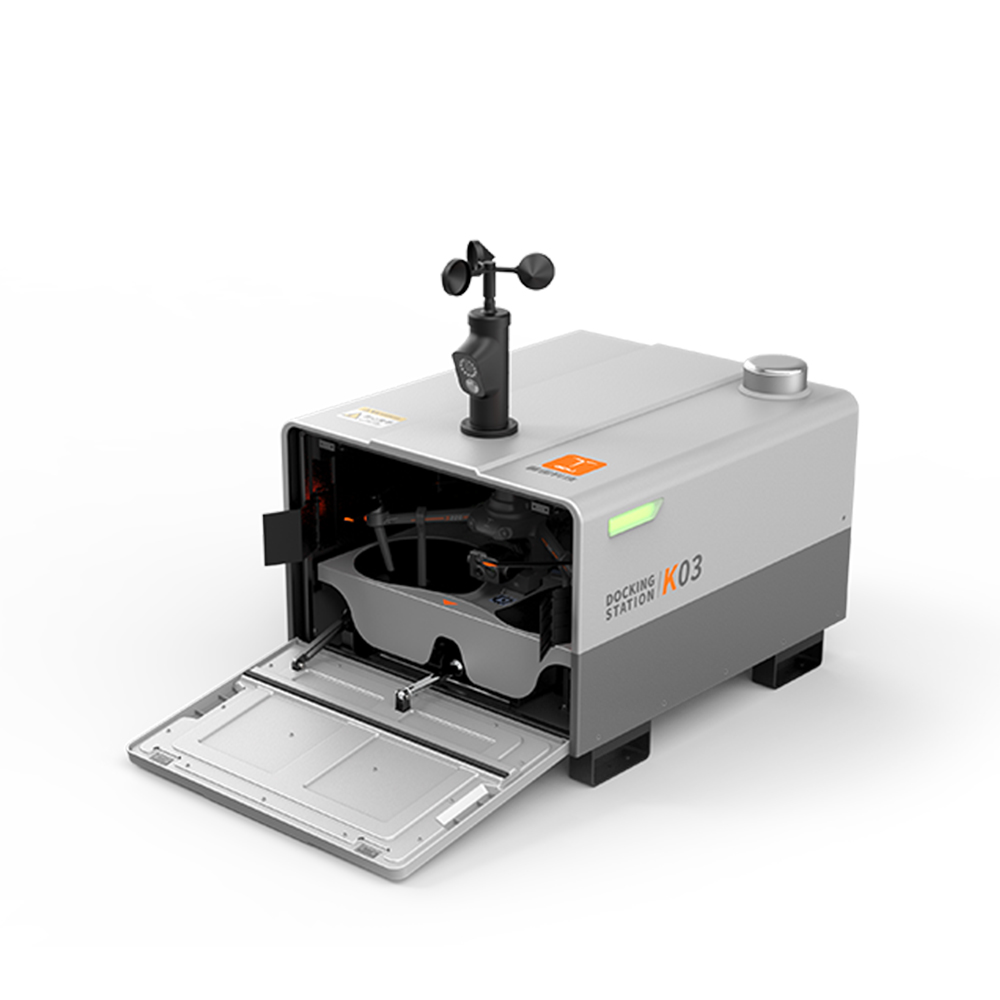
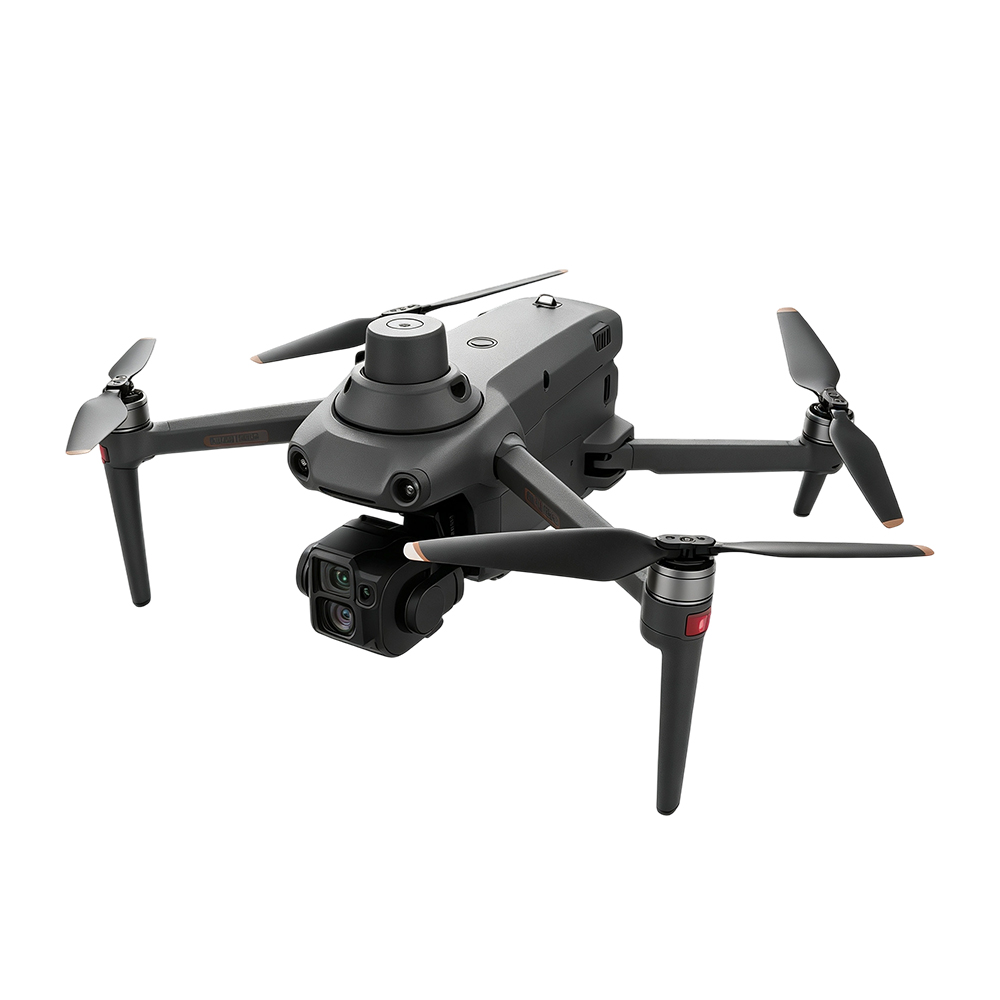
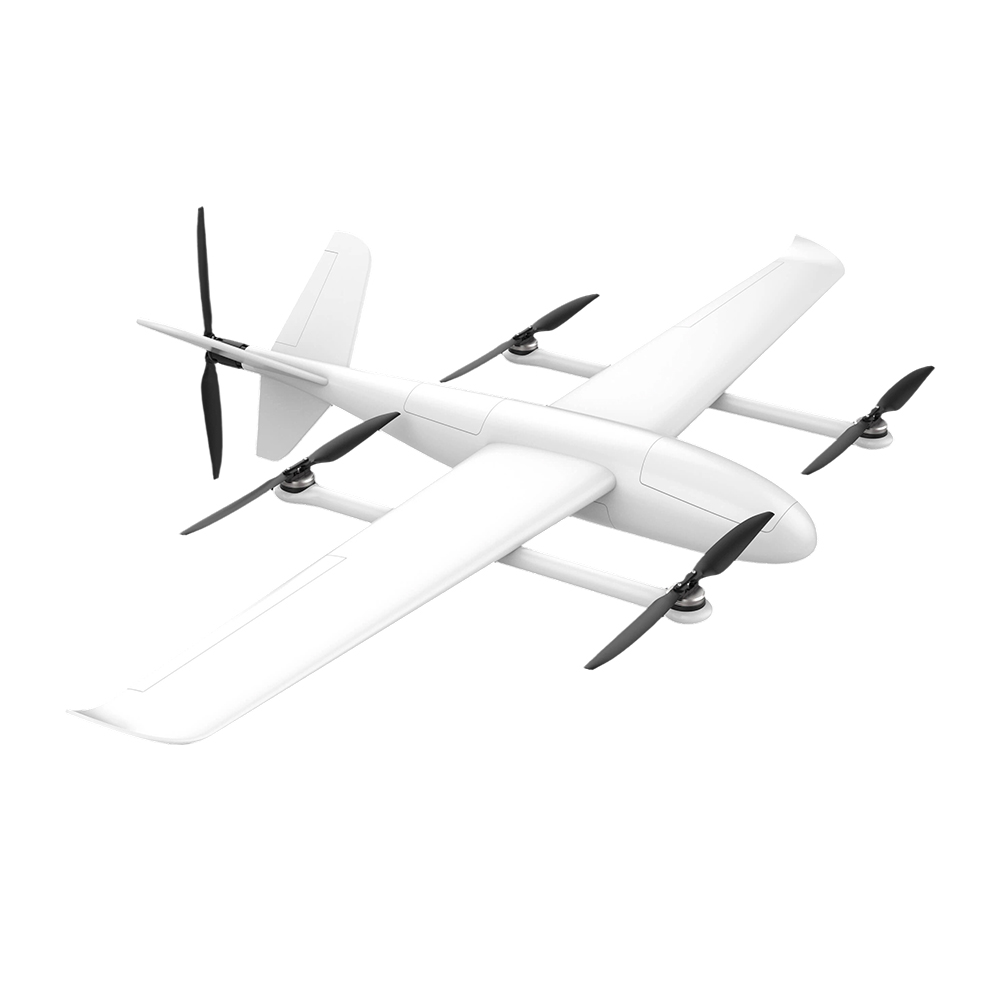
First, naming: overseas it is called a drone-in-a-box or drone dock; Chinese crews say drone nest or drone airport; product pages often say "automatic charging dock". Different words, same thing: a ground station that opens and closes by itself, recharges the drone by itself, and sends the data back by itself. It is never a standalone box — it is a system of dock + aircraft + dispatch platform.
1. Self-Check First: Three Conditions, and If One Is Missing Stop Here
A dock's job is swapping people — moving the person from the site to the back office. Whether that trade pays off depends on three conditions:
- Is the site fixed? A dock stays where it is installed. Jobs that jump from one hill to another site tomorrow are not what it is for.
- Is the frequency high enough? A dock is a capacity tool. A site flown once a day will not pay back a dock plus an aircraft.
- Is it impractical to keep people on site? If staff are already stationed there, the labor a dock saves is limited.
If all three are true, keep reading. If one is not, look at other options first: vehicle-based setups for moving sites, a pilot with a portable aircraft for low-frequency work. For how drones are actually used across industries, see this industry applications overview.
2. Docks on the Market Come in Three Form Factors
| Form factor | Typical deployment | Suits whom | The trade-off |
|---|---|---|---|
| Fixed | Rooftops, beside substations, under towers, next to guard booths | Long-term posts: power grids, industrial parks | Load-bearing, power, lightning protection and drainage must be handled |
| Vehicle / trailer | Pickup trailers, emergency fleets | Emergency response, temporary coverage, cross-region dispatch | One more vehicle and driver; higher size and weight limits |
| Portable folding | Carried up to a rooftop by one person, temporary field points | Tight budgets, sites that shift occasionally | Ingress protection and temperature control usually weaker than fixed units |
Which to pick depends on whether your site is something you "guard" or something you "chase". A substation watched for years: fixed. Missions that move with an emergency crew: vehicle-mounted. Tight budget with occasional adjustments: portable.
There is another, less visible split that affects frequency a lot: charging docks vs battery-swap docks. A charging dock plugs the aircraft in when it lands — simpler mechanics, easier upkeep, but recharging usually takes tens of minutes. A battery-swap nest replaces the drained pack automatically and relaunches within minutes, pushing frequency much higher, at the cost of more complex machinery and higher purchase and maintenance spend. The public case from State Grid's Taizhou unit used battery swap — 3 minutes on the ground, then back in the air. Choose by your frequency requirement first, then compare prices.
3. The Checklist: Nine Questions That Must Be Answered with Real Numbers
This is the most valuable section of the article. Every item deserves a written number from the supplier, not a verbal "no problem".
| # | Question you must ask | Why it matters | Typical industry range |
|---|---|---|---|
| 1 | Which aircraft does it support? Open platform or paired design? | Dock and aircraft are matched on launch mechanism, charging protocol and comms link; treat "any drone fits" claims with caution | Either a specific aircraft family, or a paired design with the supplier's own aircraft; ask whether the quote includes the aircraft |
| 2 | Total weight? Footprint? | Decides whether it fits on a pickup or a rooftop, and whether you need a crane and structural reinforcement | Lightweight class around 50 kg, conventional 120–150 kg class; footprint from under 1 ㎡ to several ㎡ |
| 3 | Standby power draw in watts? | The dock spends most of the day on standby; this number decides whether a solar setup survives | Anywhere from tens of watts to hundreds — an order-of-magnitude gap; demand it in writing |
| 4 | Peak power draw? | Decides whether a grid-connected site needs an electrical upgrade — the most commonly forgotten line item | Depends on charging power, from a few hundred watts to several kW |
| 5 | How long to recharge — and by which method? | Decides how many sorties per day | Ask the basis first: 10%→90% or 0→100%? The two differ a lot |
| 6 | Which power options? How long on backup? | For sites without grid power, solar plus batteries is often the only way | Grid / solar / internal backup battery — how many of the three; backup endurance from a few hours to a full day |
| 7 | Operating temperature range? Active thermal control? | Batteries sent out to work in extreme temperatures are the hidden trap that kills many projects | Industrial units commonly claim a -20°C to 50°C class; ask whether that is a nameplate figure or backed by active heating/cooling |
| 8 | What guarantees landing accuracy? | Whether it can land at night and in wind decides whether the whole workflow stands | Usually RTK or vision guidance; with plain GPS only, night reliability is questionable |
| 9 | How does data get back? Is the platform open? Is there an API? | Sites without broadband rely on 4G or mesh; your existing systems may need to integrate | Ask whether 4G / mesh / edge computing are options, and whether the API costs extra |
A word more on item 9. Many dock solutions are tied to the vendor's own platform — data cannot leave, systems cannot connect, and the longer you use it the more locked-in you are. If your dispatch or security system needs to talk to the dock, an API is mandatory. Have the supplier demonstrate it live before signing.
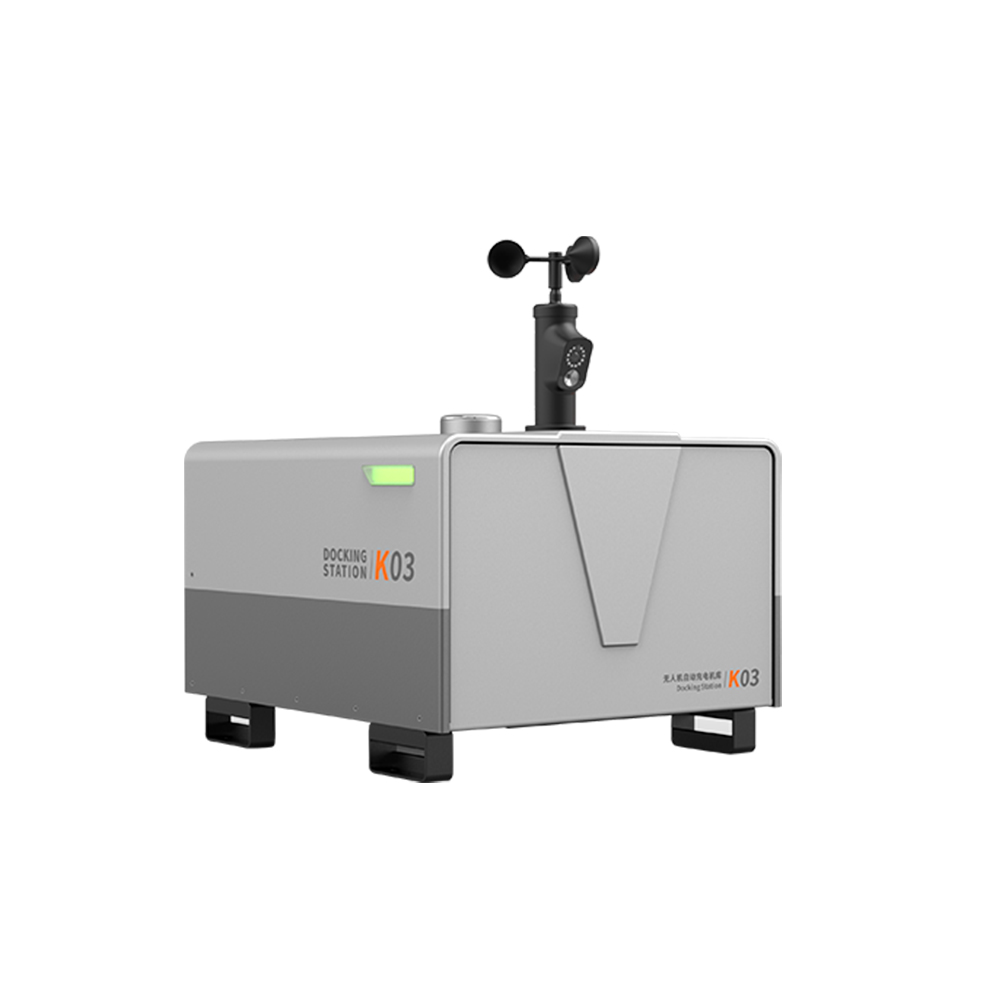
Want a sample of what "answered with real numbers" looks like? The full spec sheet of our own K03 lightweight dock — every item with its figure and what that figure means — is in another article: K03 Automatic Charging Dock: In Depth. Using it as a comparison sheet when you quiz other suppliers saves a lot of time.
4. How One Mission Actually Runs
To build intuition, here is one complete sortie of an unattended system:
- Check the weather. At the scheduled time the dock self-checks first; the onboard weather station reads wind speed and direction and holds the mission if limits are exceeded.
- Undock. The hatch opens, the aircraft launches on its preset mission — nobody touches it.
- Work the mission. Fly the route, or investigate an alarm point.
- Return. The aircraft lands precisely (usually RTK-guided) and charging starts.
- Offload. Imagery syncs into the dock, then goes back over 4G or mesh.
Once you see these five steps, you know where the people went: nobody at the site, but someone in the back office — watching the platform, verifying alerts, dispatching response, maintaining the equipment. A dock replaces legs, not brains. Any salesperson promising "install it and forget it" either has never run a project or does not plan to provide after-sales service.
5. Cost: The Box Is Only One Corner of the Bill
Asking "how much is a dock" is like asking "how much is a car" — it depends on what you count. The full bill has two stacks:
One-time (CAPEX): dock unit, paired aircraft, platform software license, installation works (foundation, power hookup, lightning grounding), first batch of spares.
Recurring (OPEX): electricity and data, scheduled maintenance, firmware upgrades, back-office staffing. Platform annual fees deserve a direct question — some schemes are free the first year and billed from the second.
There is a public reference set of numbers: for a 100 MW solar plant, skipping inspection can cost about $140,000 a year in lost generation; manual inspection twice a year costs about $120,000; a dock-based setup at roughly $45,000 for hardware plus software can inspect 12+ times a year. Those figures come from public estimates by DJI partners; the breakdown, plus accounts from other industries, is worked through in the K03 in-depth guide.
Your payback period is decided by three variables: number of sites, inspection frequency, and local labor cost. Plugging industry averages into your own project produces a wrong number almost every time. Making the supplier run the calculation on your real figures is the serious way to do it.
6. Six More Things to Settle Before Deployment
- Compliance. Rules for BVLOS and unattended operations vary widely by country; most markets require binding a licensed operator and per-project approval. For the specifics of markets like the UAE, see this regulations guide.
- Site. Load capacity, where power comes from, lightning protection, drainage. On a rooftop none of the four can be skipped.
- Connectivity. Is there 4G coverage at the site? If not, a mesh solution means extra money and extra hardware.
- Maintenance. How often, by whom, and how fast do spares arrive? For cross-border purchases this decides your equipment uptime.
- Training. What must back-office staff learn? Normally platform operation plus routine checks — a matter of days, but put it in the contract.
- Exit. Two years in, you want to change solutions: who owns the data, and can the platform be migrated? Think before signing rather than argue after.
7. The Four Most Common Traps
- Comparing only the box price. Platform fees, installation works and spare stock are not in the box, but they are in the bill.
- Reading "max operating radius" as coverage area. A claimed 8 km radius does not mean it controls every point 8 km out — buildings, hills and RF environments sit in between.
- Ignoring temperature. Southern buyers ask about heat, northern buyers forget heating. Batteries failing in cold weather is the most common cause of winter project failures.
- Assuming "installed means unmanned". Back-office seats and maintenance do not disappear. The right expectation is "one person watching many points instead of one", not "no people".
FAQ (Frequently Asked Questions)
How much does a drone-in-a-box cost?
Quotes vary widely, driven by three blocks: the aircraft (the biggest), the dock unit, and platform licensing plus installation. The sound approach is to make suppliers quote "dock + aircraft + platform + installation" separately — itemized quotes are the only way to see who is marking up what.
How much area can one dock cover?
Look at two numbers: single-station operating radius (how large an area one station can serve) and whether multi-station relay is supported (how a long corridor gets covered). Dispersed sites mean more stations; no single dock watches a whole province.
Can it run where there is no grid power?
Yes — provided standby draw is low enough and solar panels plus internal batteries are configured. When evaluating, chain questions 3, 4 and 6 together: standby watts, peak watts, backup hours. If the three numbers do not support a solar setup, walk away no matter how cheap.
Charging dock or battery-swap dock?
Frequency first: choose battery swap (back in the air in minutes). Budget and maintenance first: choose charging (tens of minutes to recharge, simpler mechanics). In between, run the math: can your frequency amortize the extra purchase cost of a swap system?
What approvals does deployment need?
Most markets have dedicated approvals for unattended and beyond-visual-line-of-sight flight, usually requiring a licensed commercial operator. Rules differ greatly by country; verify case by case before rollout.
What about extreme weather in winter and summer?
Check three things: active thermal control (pre-heating and pre-cooling), whether the weather station automatically holds missions, and whether wind ratings are split by phase. A nameplate temperature range and "the battery actually works at that temperature" are two different things — ask them apart.
Wrapping Up
This article was about how to choose. If you want one specific dock's real specifications, eight published deployment cases you can take to your boss, and cost accounts worked out by industry, go straight to the K03 Automatic Charging Dock: In Depth.
One last piece of advice: when choosing, treat "aircraft + dock + platform + compliance" as one system. If any of the four falls over, the whole system stops running.
If you have actual sites in hand, send us three things — number of sites, inspection frequency, and on-site power conditions — and we will produce a deployment plan with a payback estimate based on real specifications. Configurations not in our catalog are fine too; we can source them.
Note: industry parameter ranges in this article are general reference figures for asking questions; actual equipment follows the manufacturer's configuration. Verify regulations and approval details case by case before project rollout.