UAV Gimbal Field of View Guide: One Lens Swap Takes the Same Camera from 38° Down to 12°, a 3x Difference in Coverage
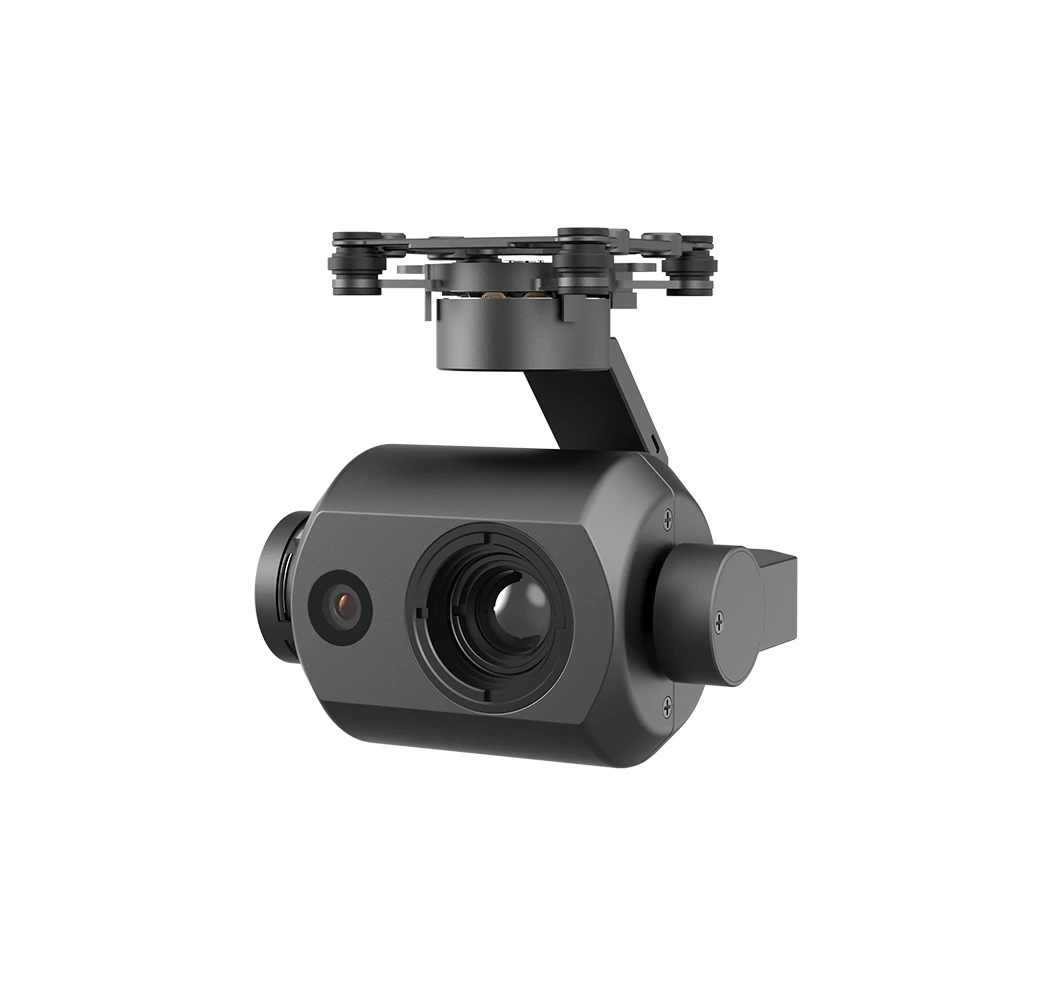
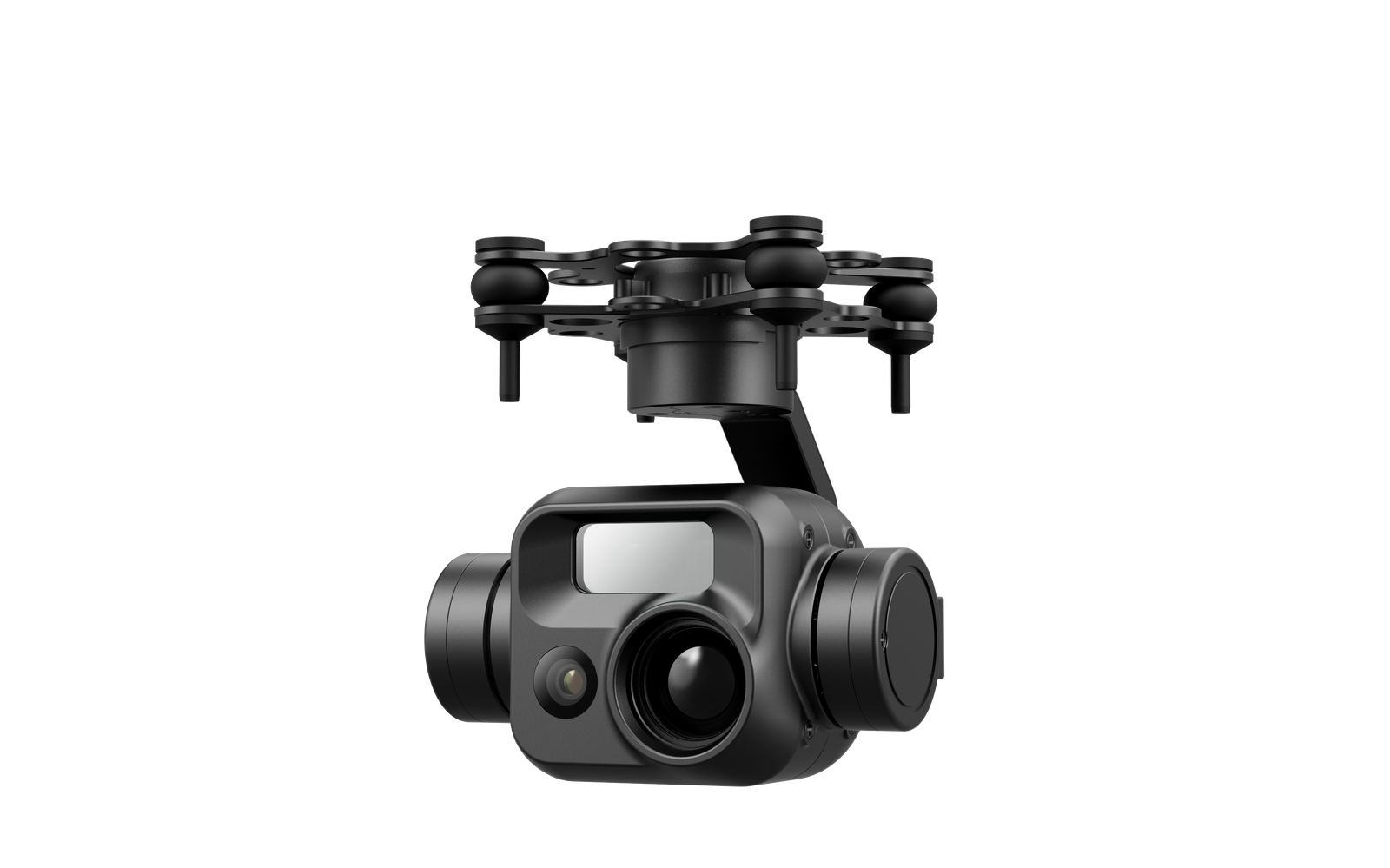
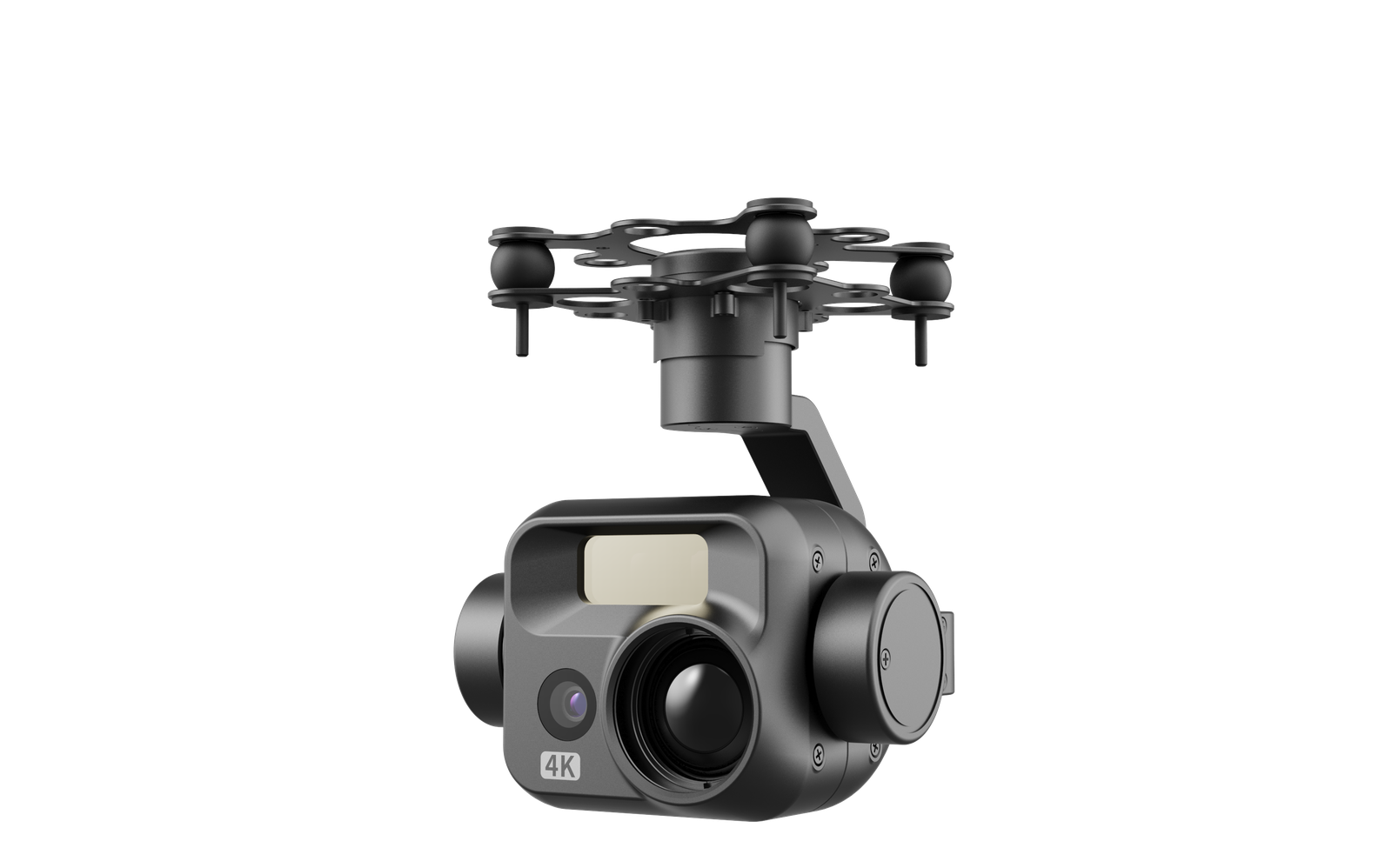
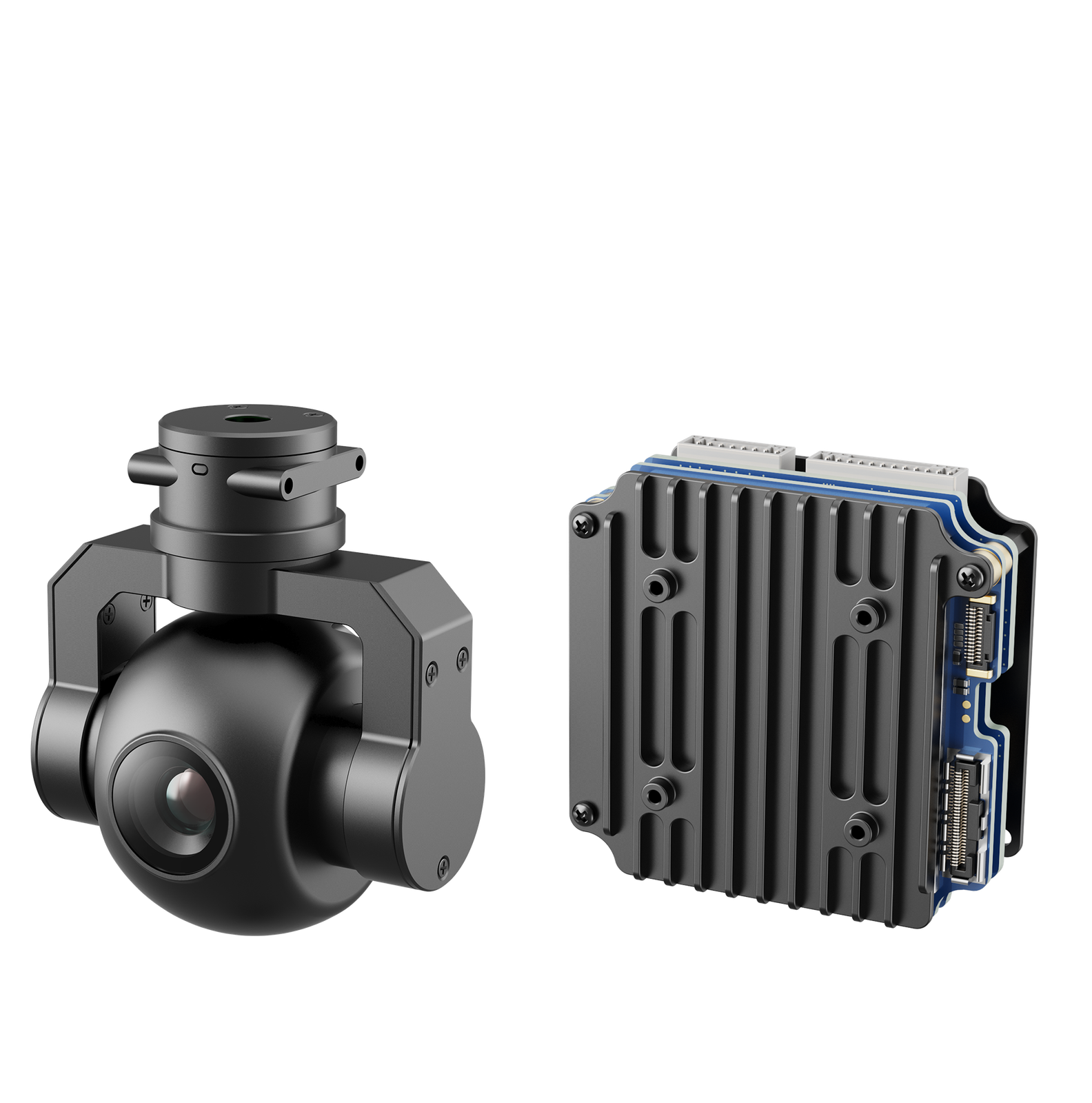
The PUDD075S is the most unassuming gimbal in our lineup — a 70-gram 2-axis micro gimbal for small multirotors, whose camera column in the datasheet lists just one 1/2.8" CMOS sensor. But the lens column lists four numbers: 8mm, 12mm, 16mm, 25mm.
This gimbal uses the same sensor and the same lens mount across all four variants; only the focal length changes. The four focal lengths correspond to fields of view of 38.3°×22.1°, 26.1°×14.8°, 19.7°×11.8° and 12.7°×7.1° respectively, and the manufacturer's recognition distances are rated at greater than 170 m, 250 m, 330 m and 500 m.
From the widest option to the narrowest, the field of view shrinks 3x and the recognition distance grows nearly 3x. These are two sides of the same trade: narrowing the field of view magnifies a small patch of the scene at the cost of everything outside it. Which option to choose depends on whether your mission is about finding a target or identifying one — not on budget.
This article breaks field of view down properly: what it actually measures, how to convert it into ground coverage, where wide and narrow options each fit, and the details that never make it onto datasheets but decide whether a mission works. All data comes from the factory specification sheets of gimbals we sell; the worked calculations are geometric estimates, and actual results must be confirmed against your specific platform and operating conditions.
Counter-intuition No. 1: Field of view measures "how wide," not "how sharp"
Field of view (FOV) describes how large an angular slice the lens frames in one shot. It has nothing to do with how many pixels the image contains. The same 1/2.8" CMOS sensor delivers a 38.3°-wide picture with an 8mm lens and a 12.7°-wide picture with a 25mm lens — not one pixel more, not one pixel less.
Think of swapping prime lenses on a camera: same body, same card, different glass. For landscapes you want 24mm — everything fits in, but people turn tiny in the frame. For distant subjects you switch to 200mm — the frame narrows to a slice, but the subject fills it. Exactly the same thing happens on a drone gimbal, except the lens sits on a mount that rotates.
On a datasheet, "focal length" and "field of view" are two numbers describing the same thing from two directions. With a fixed sensor size, longer focal length means narrower field, shorter focal length means wider field. The industry also uses the term equivalent focal length — the value recalculated for a full-frame body. When comparing across models, equivalent focal length is the fairer number; within one gimbal family, field of view is the more direct one.
Counter-intuition No. 2: Field of view converts into ground coverage — and you should run that math yourself
A datasheet gives you an angle; a mission plan asks for an area on the ground. One formula bridges the two: ground coverage width = 2 × flight altitude × tan(horizontal FOV ÷ 2). The industry also calls this the swath — the "band width" in flight-planning software is the same number. Run it for the four PUDD075S lens options at 100 m altitude, camera pointing straight down:
| Focal length | Horizontal FOV | Coverage width at 100 m | Rated recognition distance |
|---|---|---|---|
| 8mm | 38.3° | ≈ 69.5 m | >170m |
| 12mm | 26.1° | ≈ 46.4 m | >250m |
| 16mm | 19.7° | ≈ 34.7 m | >330m |
| 25mm | 12.7° | ≈ 22.3 m | >500m |
At the same altitude, the swath shrinks from 69.5 m down to 22.3 m across the four options. That number directly shapes how you fly: the 8mm option sees a band nearly 70 m wide in one pass, so one sweep covers the corridor; the 25mm option frames only 22 m, so covering the same corridor takes three passes, with battery cycles and endurance scaling accordingly.
Altitude is the other variable, and coverage scales linearly with it. The same 25mm lens covers about 11 m at 50 m altitude and about 45 m at 200 m. In other words, "change altitude" and "change lens" have similar effects on the ground footprint, with a similar cost structure — both trade coverage for something else. But regulated airspace and mission rules cap how high you can actually fly, so size the lens for the altitude you can really operate at, not the one you wish you could.
The formula works in reverse, too: start from the coverage your mission needs. If a customer says "I need to frame a 60 m band from 150 m," the focal length has to fall between 8 and 12mm. If they say "frame 200 m at once," none of our fixed-focal gimbals qualify — it takes a wide-angle lens or a re-planned narrow-swath segmented scan. One phrasing is a lens-selection question; the other tells you the mission plan needs rework before any lens is chosen.
One boundary to state clearly: this formula assumes the optical axis points straight down. Oblique viewing stretches the footprint and needs a modified formula, and wide-angle lens distortion needs edge correction on top of that. For order-of-magnitude planning the formula above is enough; before anything goes into a contract, walk it against the actual flight lines on site.
Counter-intuition No. 3: A narrow field of view does not by itself make targets recognizable — that takes "ground sampling"
Halving the field of view does double the apparent size of a target in the picture. But whether a target can be recognized depends on how many pixels it occupies, and that number is set by two things together: the lens field of view and the sensor's pixel density. Field of view controls only one of them.
The industry's name for "the angle one pixel subtends" is IFOV — instantaneous field of view, known in Chinese discussions as single-pixel angular resolution. It pairs with FOV: FOV is the width of the whole picture, IFOV is how finely that picture is divided. With a fixed picture width, more divisions means each division is smaller, which makes any given object look bigger.
Putting several of our gimbals side by side makes this concrete. The PUTD095's visible channel pairs a 1/2.5" CMOS with 48 effective megapixels; the PUTD090 is the same 1/2.5" sensor at 48 MP. Identical sensors, fields of view of 58.5°×35.5° and 59.5°×35.5° — practically the same. Their differences lie elsewhere, not in the field of view.
Now look at the PUDD075S column. Its sensor is only 1920×1080 — about 2 megapixels, more than a full tier below the two above. Yet by narrowing the field from 38.3° down to 12.7°, it magnifies the same target 3x in the picture, and the recognition distance correspondingly runs from 170 m out to 500 m. That is "fewer pixels but a narrower view" — the two factors cancel out in the math, and the narrow view wins.
The industry's name for the folded quantity is ground sampling distance (GSD) — how many centimeters of ground one pixel covers. It is the real parameter behind "can this be recognized," and neither FOV nor resolution alone predicts it. With FOV, sensor size and pixel count in hand, the math is one line: GSD = ground coverage width ÷ horizontal pixel count.
Run it on the two PUDD075S options and "seeing farther" becomes concrete. The 8mm option covers 69.5 m at 100 m altitude; divide by 1920 horizontal pixels and one pixel is 3.6 cm, so a 1.7 m person spans 47 pixels. The 25mm option covers 22.3 m; one pixel is 1.2 cm and the same person spans 146 pixels. More than a 3x jump in pixels on target — and not a single new pixel was added; every one of them was just assigned to a smaller patch of ground.
This conversion has a published cross-check. A common night-SAR configuration — a 640×512 thermal core, 33° horizontal FOV, 100 m AGL — works out to about 9 cm per pixel, and a publicly available police operations white paper gives the same figure: roughly 9 cm/pixel, a shoulder-width person spanning 5–6 pixels. When independent sources land on the same number, the method isn't one vendor's marketing. The same math holds across our other models — the thermal selection article back-calculated recognition distances using "a person spans 12 pixels" and all three tiers matched the datasheet ratings.
So when judging how sharply a gimbal sees, there is exactly one number to look for on the datasheet: IFOV, or its folded form GSD. Field of view tells you how much ground one frame covers; IFOV tells you whether a target inside that frame can be counted. Dividing field of view by pixel count takes ten seconds and beats comparing ten pages of specifications.
The smaller the GSD, the more pixels any given object occupies and the clearer it reads. How thermal parameters combine with focal length, and how visible and thermal sensors divide the work, is broken down in detail in the thermal camera selection article — not repeated here.
The PUDD075S that opened this article is a living sample of that relationship — it is also the only fixed-focal gimbal in our lineup where you choose the lens focal length at order time, across four options from 8mm to 25mm.
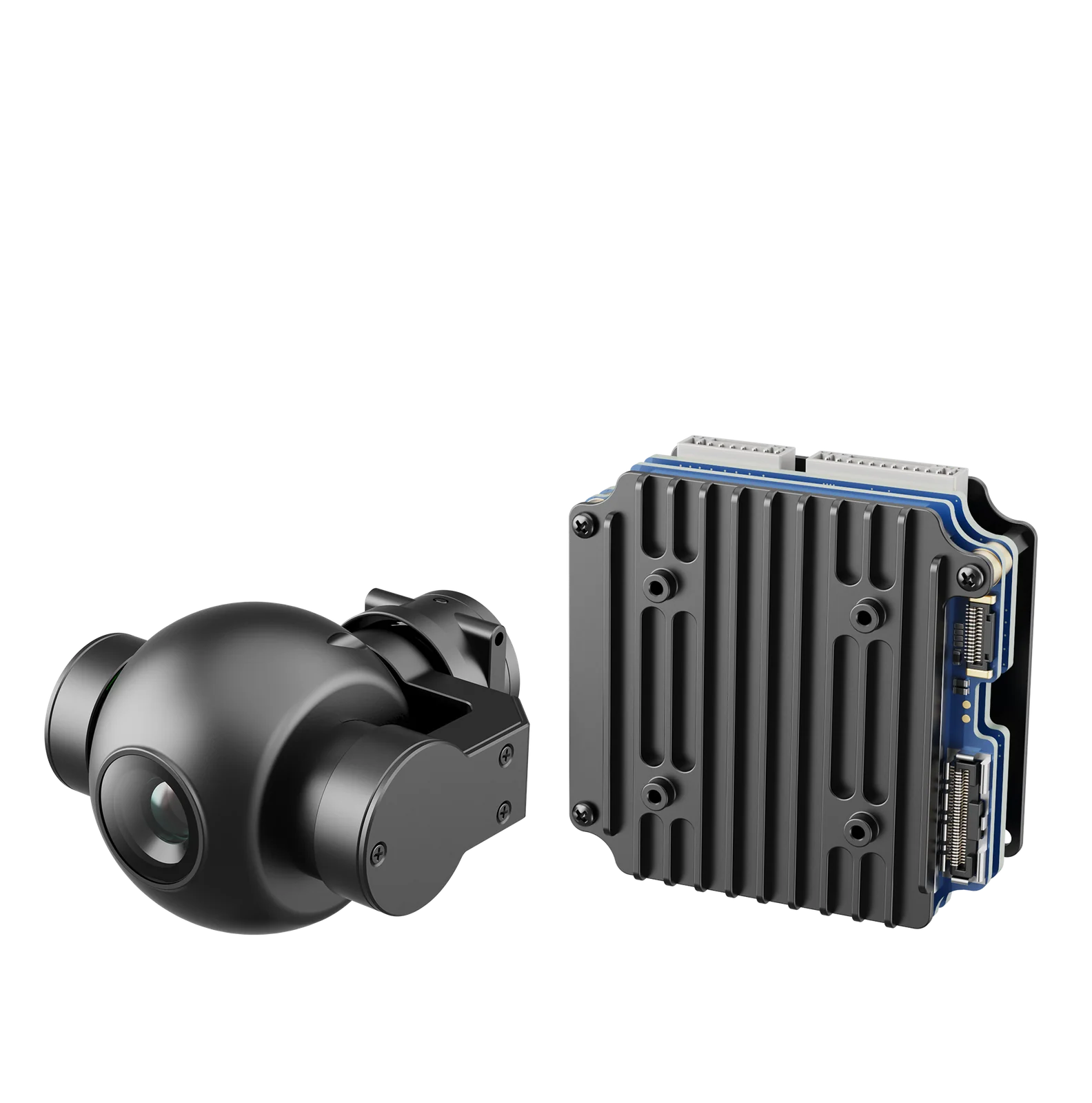
On its datasheet, focal length and field of view are written as four side-by-side pairs: 8mm to 38.3°×22.1°, 25mm to 12.7°×7.1°. The same rows list stabilization accuracy ≤0.01°, gimbal weight 70±5 g, pitch from −100° to +60°, yaw from −60° to +60° — the items that matter in the next section on whether the system actually flies well.
Where wide and narrow each fit
Split the field of view into two ends and the selection logic falls into place. The wide end solves "don't miss it"; the narrow end solves "see it clearly." Most missions run in two phases: find the suspect target in the air first, then swing the lens over and identify it. Search wants wide; identification wants narrow.
Our way of putting both phases in one airframe is two channels. The PUTT155 pairs a wide-angle visible camera with an 18mm thermal; the PUTT170 pushes the thermal to 25mm. In search, the wide channel frames the target; in confirmation, the narrow channel resolves the detail. How dual sensors divide work and how zoom and fixed-focal share tasks is covered in the thermal-zoom dual-sensor article and the zoom-vs-fixed-focus article — here we only deal with the field-of-view layer.
With a single channel, flight-line planning has to fill the gap. The principle: spend the narrow option where recognition actually matters — key facilities, boundary lines, access points — rather than sweeping everything once with a mid focal length, which disappoints both ways: wide areas come out unclear, and close areas get overflown.
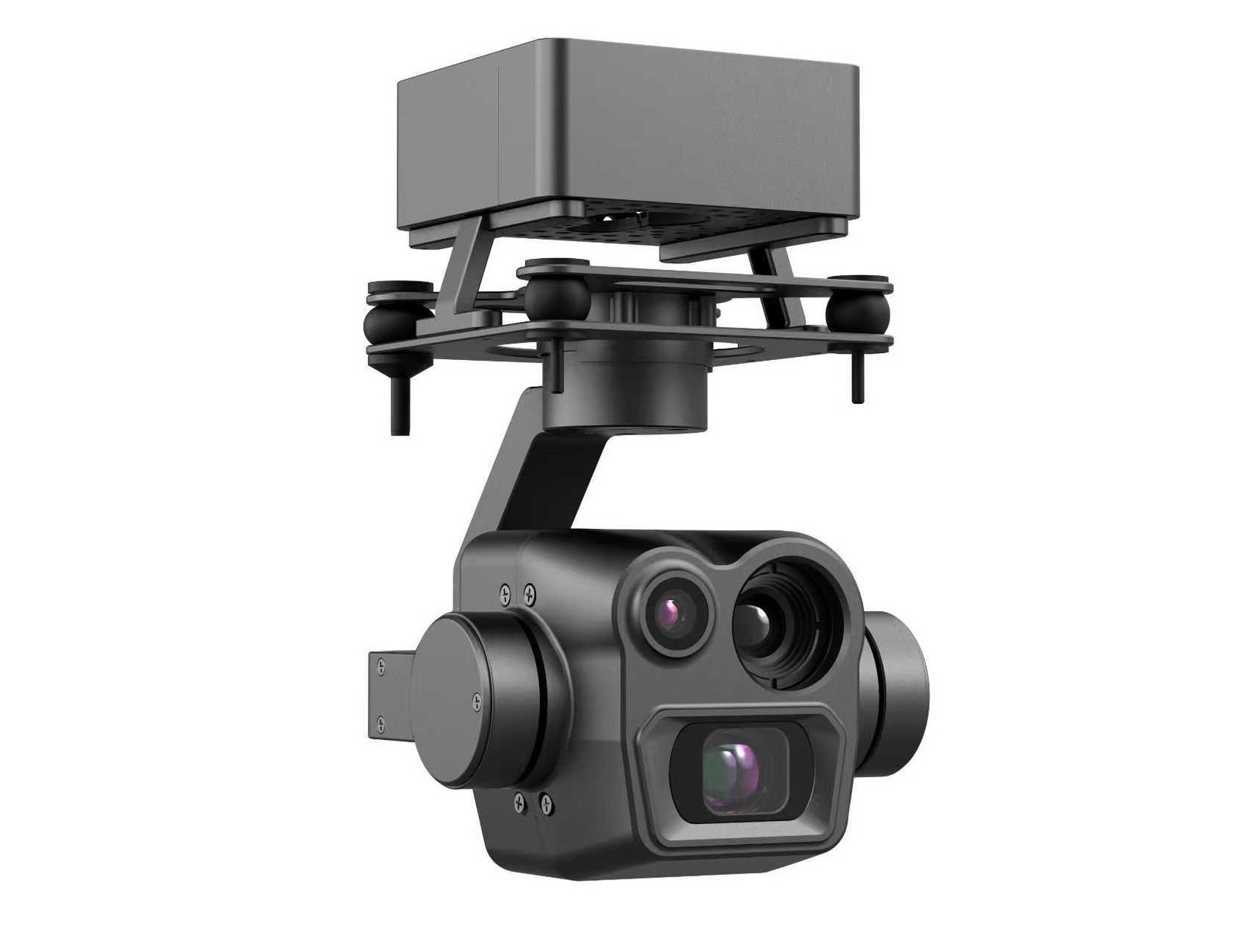
The PUDD075CCT tri-sensor tracking module has the widest field-of-view span in our lineup: a 113.1°×63.6° wide channel, a 14.8°×8.4° telephoto channel and a 16.9°×12.8° thermal channel. The wide option is a classic search lens — 113 degrees nearly frames the entire forward hemisphere; the telephoto option at 14.8 degrees is a slit. On one gimbal, those two numbers differ by 7.6x, and the whole mission plan rests on that difference.
One more distinction worth drawing: zoom and field-of-view flexibility are not the same thing. True FOV flexibility means the lens itself varies its field continuously in flight — zoom-class gimbals list "continuous optical zoom" on their datasheets, and our tri-sensor line prints 120x hybrid zoom right in the title. A continuously variable field is operator-adjustable at any moment; switching between fixed channels is a hardware changeover with settling time in between.
Beyond field of view: three more parameters decide whether it flies well
Field of view only answers "how much is framed." Whether the system actually works in the air depends on three more parameters, usually scattered across different rows of the datasheet.
First, the gimbal's travel range. A narrow field frames little, so the gimbal's rotation range has to keep up. The PUDD075S moves from −100° to +60° in pitch and −60° to +60° in yaw. The 25mm option frames only 22 m of width at 100 m altitude — drift slightly off line and the target leaves the frame until the gimbal sweeps back. A small travel range paired with a narrow field of view is how "losing the target" happens in practice.
Second, stabilization accuracy, read together with the field of view. This 2-axis module is rated at ≤0.01° (against 0.5° disturbance @1Hz). That magnitude fits a narrow field: a 0.05° jitter inside a 12.7° frame displaces the target about 0.4% — a slight wobble. The same 0.05° inside a 38.3° frame displaces it 0.13% — essentially invisible. Narrow fields demand more from stabilization, and the margin has to be checked in angular terms, not just "the spec passes."
Third, the weight-and-power chain. Longer focal lengths bring heavier, longer lens groups; total weight and power draw follow. The PUDD075S gimbal weighs 70±5 g with a 56±2 g AI module — comfortable on small multirotors. Step up to the larger tri-sensor modules and that margin has to be recalculated — how module weight, power and center of gravity are budgeted together is covered in the micro gimbal SWaP article.
A selection table you can plug your own mission into
| Mission type | Flight altitude | Field-of-view tier | Our matching models |
|---|---|---|---|
| Factory, campus and riverbank patrol | 80–120 m | 38°-class wide | PUDD075S (8mm) / PUDD075CW |
| Border and perimeter fixed-point surveillance | 150–300 m | 12°–20° telephoto | PUDD075S (25mm) / PUTD070A |
| Night search and rescue, target location | 100–200 m | Thermal 48° wide first | PUTD070A / PUTD090 |
| Long-range person/vehicle identification | 200 m and above | Thermal 17°–25° telephoto | PUTT155 / PUTT170 |
The coverage figures in this table are geometric estimates from the formula above, using rated datasheet values — not commitments. Dropping onto a real project adds three more variables: target-to-background contrast, how long the aircraft can hold a stable hover, and whether the gimbal's stabilization keeps up with your flight speed. The first two belong to lighting and flight control; the third lands on the gimbal — a 0.05° angular wobble is half a meter of displacement at 300 m, and rated recognition distances evaporate. How angular wobble converts into position error in the picture is derived geometrically in the target geolocation guide.
Be clear about what this table is: rated coverage folded through geometry, with no per-unit flight testing. That is enough to rank options and rule out clearly mismatched tiers; it is not enough to write into a contract or an acceptance standard — those need the actual lens flown on the actual route.
One more commonly asked point: field-of-view ratings carry a ±5% tolerance, and the relative error is largest on the widest options. That 113.1° figure may measure 107° or 119° on an actual unit and still be in spec. For coverage math where precision matters, do not treat the rated value as an exact one.
Our limitations, stated openly
A single-channel fixed-focal gimbal cannot be both wide and sharp. The PUDD075S's four lens options must be fixed at order time — changing lenses after delivery means a factory return. The visible channel on tri-sensor modules like the PUTT215 lists 120x hybrid zoom, but the digital portion crops the image and pixels fall with every crop; it is not the same as a true telephoto lens. Neither fact should be papered over at selection time with "we can solve that later."
One more: geometric coverage is not effective coverage. Gimbal response has latency, the airframe drifts in crosswind, and wide-angle edge distortion needs correction — real survey lines overlap at the ends and can leak in the middle. Planning with 10–15% overlap is standard practice; the exact number depends on your lens distortion data and flight speed, and we work it out against your actual mission plan.
If you need a field-of-view tier we do not stock, or want wide and narrow split across two coordinated airframes, send us the mission parameters: flight altitude, coverage requirement, target type and payload margin — we will run the numbers and come back with a configuration.
One-line summary
Field of view measures "how wide"; focal length measures "how sharp"; on a fixed sensor they are two faces of the same thing. What you are really choosing is which phase your mission lives in — finding or identifying. Before buying, take the formula above, plug in your flight altitude, compute the coverage width and compare it against the mission requirement. That step takes under a minute and beats reading ten pages of specifications.
Tell us your mission
Send us the mission parameters: how high you fly, how wide an area you need to cover, whether you are looking for people, vehicles or equipment, and how much payload margin your platform has left. We will run these numbers together and tell you which field-of-view tier to pick, whether a dual-channel setup is warranted, and whether the weight and power budget works on your airframe.
Industry integrators (power, emergency response, border projects) → describe the target type and operating radius, and we will back-calculate the focal-length tier from the required coverage width and recommend matching models. Dealers (when the end customer is unsure) → send the customer's operating conditions and we will return a written confirmation of lens tier plus platform compatibility. Need a field-of-view tier we do not stock → use our out-of-catalog sourcing: write down the focal length, field of view and platform constraints, and our supply chain will match a model.
To reach us: leave a message on the inquiry page marked "FOV selection." Our technical team replies within 24 hours. Selection consulting is free.
Frequently Asked Questions FAQ
Is a larger field of view always better?
No. A wide field serves search; a narrow field serves identification — and most missions need both. Two channels on one gimbal is the clean solution. With a single channel, either plan the flight lines so the narrow view lands where recognition matters, or accept that wide areas come out unclear.
Is 8mm vs 25mm only about sharpness?
No. At 100 m altitude the 8mm option covers about 69.5 m of width and the 25mm option about 22.3 m — a 3x difference. A 3x coverage difference means roughly 3x the flight passes to sweep the same area, with endurance and battery rotation scaling with it.
Can field of view be converted back to focal length?
Yes, if you know the sensor size. Each direction has its own form: focal length = (sensor dimension ÷ 2) ÷ tan(FOV ÷ 2). Without the sensor size the math is impossible, which is why the rated focal length on the original datasheet is the easier starting point; when a datasheet lists only the angle, keep the two forms distinct — they are not the same number.
Why do some datasheets list HFOV and others a single angle?
Because the rated value is often the diagonal angle, while ground-coverage math needs the horizontal FOV. Sensors are rectangular, so the diagonal runs larger than the horizontal. Consumer integrated cameras rated at 84° correspond to about 71.6° horizontal. Using the diagonal in coverage math inflates the result by 15–20%. Our datasheets state H×V explicitly — horizontal times vertical — and any figure marked (H) or (V) matches. For any model that lists one unmarked number, confirm with the manufacturer whether it is horizontal or diagonal.
Can a rated 120x zoom replace a telephoto lens?
Not equivalently. The digital portion of a hybrid zoom crops and magnifies; pixels fall with every crop, and the detail never matches a true telephoto lens of the same focal length. That is what "hybrid" on a datasheet means. When the mission needs a real telephoto, choose the long-focal-length option.
Does the ±5% tolerance matter?
It depends on the tier. On the 38° option, 5% is 1.9° — negligible for coverage estimates. On the 113° option, 5% is 5.6° — over a meter of coverage width at 10 m altitude. For precision coverage work, measure the actual lens; do not compute from the rated value.
Gimbal travel range or field of view — which to check first?
For narrow fields, check the gimbal first. A 12.7° field frames only 22 m of width at 100 m; with a ±60° yaw range, drifting slightly off line puts the target out of frame until the gimbal sweeps back. A 113°-class wide field barely depends on gimbal rotation. Narrow field plus small travel range is how targets get lost in practice.
Why do field-of-view ratings all carry ±5%?
Lens assembly tolerances, sensor cropping and measurement method all introduce deviation, and the industry rates it at this magnitude. It is telling you to keep margin in any threshold calculation. Use rated angles for comparisons and measured values for the critical numbers in a deployment plan.
Disclaimer: parameters in this article come from the factory specification sheets of gimbals we sell. Ground coverage widths are derived from 2×altitude×tan(FOV÷2) and exclude lens distortion, gimbal response latency, flight drift and line overlap — they are worked examples, not measured results; actual coverage must be confirmed against the specific platform, lens and flight-line plan. Field-of-view tolerances are cited as rated (±5%).