In the Gulf region's summer, daytime temperatures regularly exceed 45℃, and ground temperatures at noon are even higher. At this temperature, for a transport aircraft with a rated payload of 100 kg, the customer really wants to know: "How much more can I hang?"
This article does not discuss "I was on site" stories; it only covers verifiable items: public meteorological data show how hot the environment really is, factory specifications state the machine's rated capacity, and physics formulas show the difference between the two. All algorithms can be verified by you, and we also recommend taking them to other suppliers for verification.
The parameters in this article are taken from factory specifications; the effect of temperature and altitude on air density is calculated using the ideal gas law; the derating conclusions are engineering estimates, not bench tests—we clearly indicate step by step which steps can be calculated and which require flight verification.
First, the conclusion: three "payload" concepts, don't mix them.
In the industry, "payload" actually has three meanings; mixing them leads to disputes:
- Rated payload: the upper limit measured by the factory under standard conditions. The TS100 is 100 kg.
- On-site payload: the weight you dare to hang after calculating based on the day's temperature, altitude, and wind.
- Safe payload: on-site payload reduced by 20%, leaving hover margin, maneuver margin, and operational error.
Many projects run into issues not because the machine is incapable, but because the first number is used directly as the third. First, place the factory specifications of the three platforms side by side, and pay attention to the "service ceiling" and "operating temperature" rows—they are the ceiling for on-site payload.
| Parameter | TS100 Transport Aircraft | 15-inch FPV | FY-VT04 VTOL |
|---|---|---|---|
| Maximum Effective Payload | 100 kg | 7.5 kg | 3 kg |
| Full-load endurance | 100 kg payload approx. 10 min | 8–15 min | 120 min with 1.5 kg payload |
| Maximum ceiling | 1500 m | 5000 m | 4800 m |
| Wind resistance | Level 6 | — (per model configuration) | > Level 6 (fixed-wing mode) |
| Operating temperature | -20℃ ~ 45℃ | Per avionics configuration | -20℃ ~ 50℃ |
Note: the TS100's operating temperature upper limit is listed as 45℃. This means a 50℃ site is not "cannot fly", but rather already exceeds the factory‑specified range; whether to fly and how much payload to carry must be confirmed separately with the manufacturer, not decided on your own. This point is especially important in tender documents; a single wrong sentence becomes a hard defect at acceptance.
Heat steals payload from three places
The first is the battery. The internal resistance of a lithium battery first decreases then increases as temperature rises; the real issue is voltage collapse at the end of discharge under high temperature: a pack rated at 49000 mAh flown in a 50℃ environment will deliver less usable capacity when it reaches 3.5 V/cell than at 25℃. Moreover, once the battery temperature exceeds 60℃ it should not be recharged, which directly determines how many sorties you can fly in a day — not that it cannot fly, but that it cannot be recharged.
The second is the propulsion system. The ESC has thermal protection, with an industry‑default trigger around 140℃; when approached, it reduces power on its own. Even with full throttle, current cannot rise, resulting in "lack of power, slow climb, hover jitter." This is not a fault; it is protection.
The third is the air itself, and the most easily overlooked. Air density calculated by the ideal gas law: ρ = p/(R·T). At sea level 15℃ it is about 1.225 kg/m³; at 50℃ it drops to about 1.09 kg/m³, a decrease of nearly 11%. The propeller generates thrust by pushing air downward; lower density means less thrust at the same RPM, so the only way to compensate is to increase RPM — which raises current draw and reduces endurance. This forms a closed loop: heat → lower density → higher RPM required → more power consumed → more heat.
Altitude is harsher than temperature: a single density table explains it
Based on the International Standard Atmosphere, the density ratios are approximately as follows (sea level 15℃ taken as 100%):
| Altitude | Density ratio at 15℃ | Density ratio at 45℃ | What it means |
|---|---|---|---|
| 0 m | 100% | ≈ 90% | At sea level high temperature, thrust drops about 10% |
| 1000 m | approx. 89% | approx. 80% | the norm at most Middle East highland job sites |
| 1500 m | approx. 86% | approx. 78% | near the TS100 climb limit, margin already thin |
| 3000 m | approx. 74% | approx. 67% | TS100 exceeds rated limit; must change platform or reduce payload |
| 4800 m | approx. 61% | approx. 55% | VT04 operating ceiling |
So the correct understanding of "ceiling 1500 m" is not "can fly to 1500 m," but "at 1500 m can still operate safely at rated payload." Beyond this line it is not that you cannot climb; it is that margin is insufficient and accident probability rises. Our advice is straightforward: do not treat the ceiling as an altitude for flight demonstrations.
Incidentally, this is also why four platforms all rated at 3–8 kg can have ceilings differing by 1500 m and 6000 m—the difference lies in power margin, disk loading, and gross weight, not in "whether the motor is good."
How the derating table is calculated (method provided, not made-up numbers)
The algorithm below can be verified by any engineer with basic physics knowledge, and we suggest you take it to other suppliers as well:
- Calculate density ratio: Using the table above, convert the day's temperature and altitude into a percentage.
- Calculate available total thrust: Rated total thrust × density ratio. TS100 single-motor limit thrust 57 kg, eight motors combined 456 kg.
- Calculate hover requirement: Empty weight 41.8 kg (excluding battery and payload) + battery + payload = actual takeoff weight, maximum takeoff weight 168 kg.
- Check margin: Available total thrust ÷ actual takeoff weight; if below 1.3, do not take off; this reserves margin for gusts and pilot error.
Take 50 °C at sea level as an example: density ratio ≈ 0.90, available total thrust ≈ 410 kg, fully loaded 168 kg takeoff still has ≈ 2.4× margin—thrust is not the first thing to give out at this point. What actually stops you is battery temperature and ESC power derating, and the fact of "exceeding the 45 °C rated range" itself. Conversely, at 1500 m with 45 °C, density ratio drops to 0.78, margin falls to 2.1×; carrying 100 kg at that point is gambling—we generally recommend reducing to around 70 kg, preferring an extra sortie.
This must be stated clearly: The figures above are engineering estimates based on ideal gas and static thrust, not bench-tested data. Real derating curves require high-temperature high-altitude test flights per model [requires manual verification]. If anyone hands you a "50 °C at 70 %" table without stating test conditions, do not trust it.
Three real operating conditions, three handling approaches
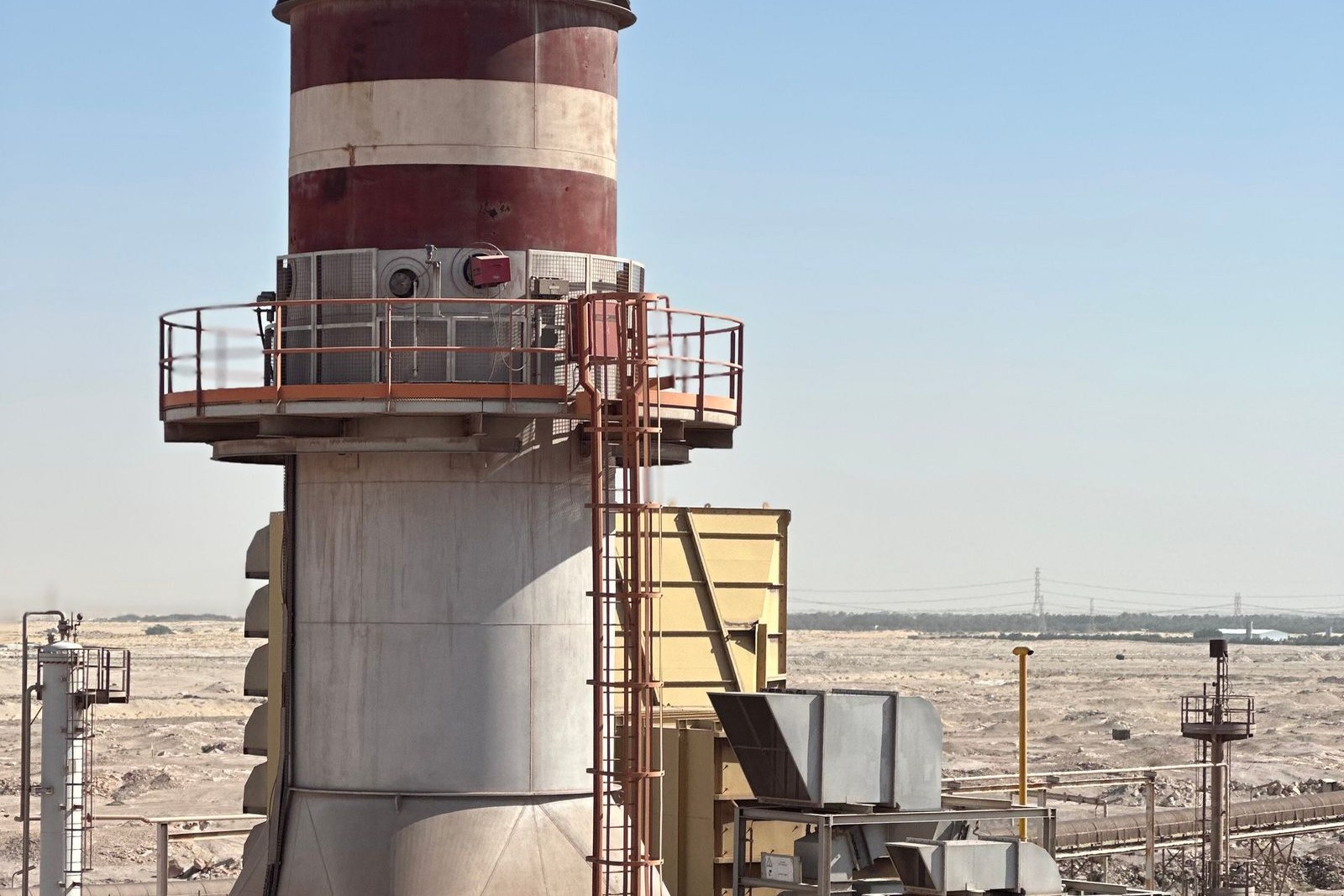
Gulf 50 °C dust. Reduce endurance first, or reduce payload first? Our recommendation is reduce endurance first: compress each sortie from 10 minutes to about 7-8 minutes, landing temperature drops significantly, battery and ESC both run easier, and you can actually fly two more sorties per day. Payload is only reduced when "this sortie must be completed in one trip." Dust adds another cost item: air intakes, propeller leading edges, motor bearings—clean every two weeks; skip cleaning and you get chronic thrust loss.
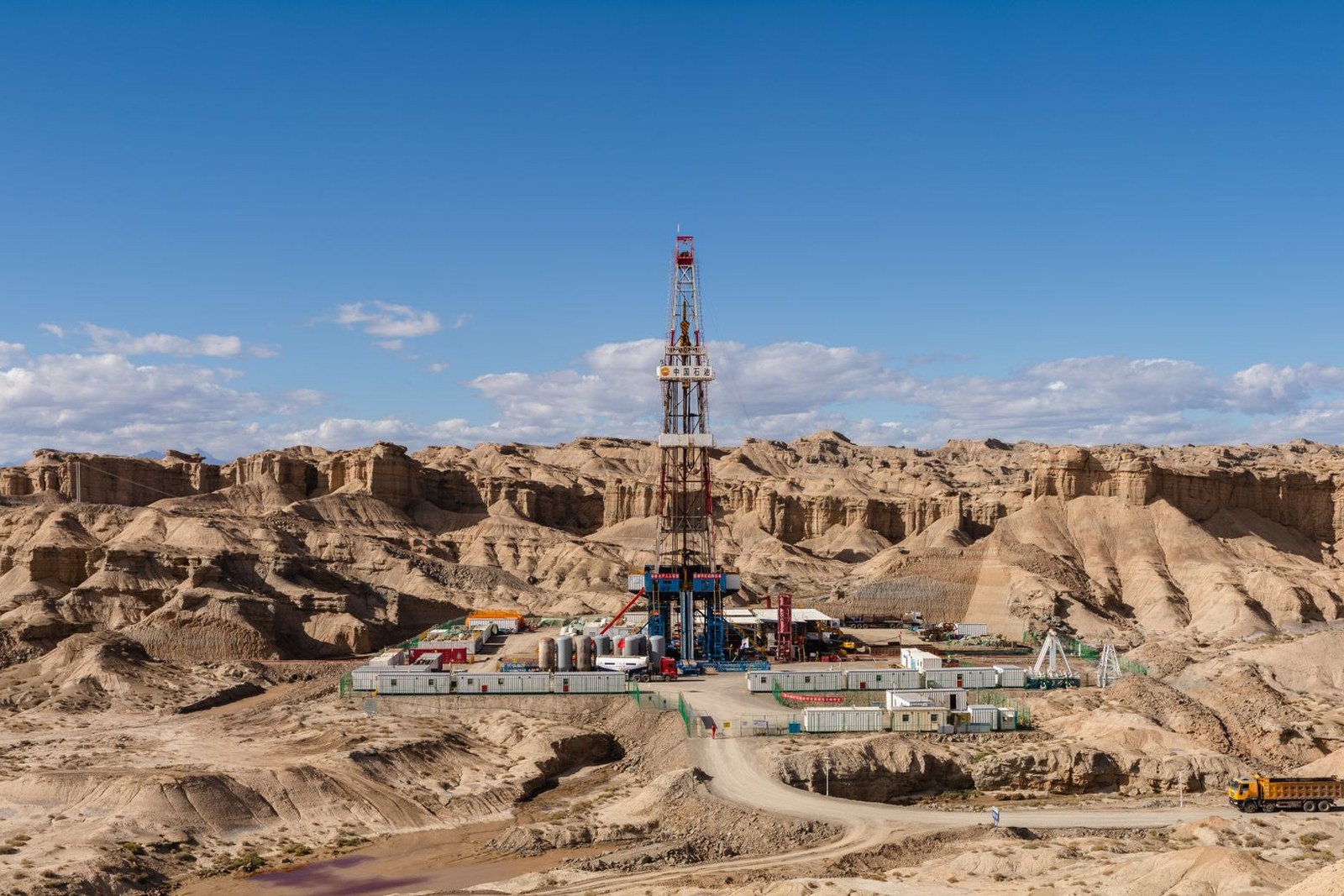
Highland oilfield 1500–3000 m. TS100 reaches its rated ceiling at 1500 m; 3000 m is directly out of range. This condition typically has two options: switch to VT04 (maximum operating altitude 4800 m, trade-off is payload only 3 kg but endurance measured in hours), or stay on TS100 with payload compressed to 60–70 kg and route shortened. Which to choose depends on whether the customer wants "more per trip" or "more trips per day."
Coastal salt spray plus Force 6 wind. Force 6 is the wind resistance limit, not the daily working wind. The limit means "can still fly," not "can still work steadily, can still deliver precisely." Salt spray is more practical: rinse propeller roots and motor mounts with fresh water after every landing, full-aircraft inspection once a week; otherwise bearings rust and thrust decays without you noticing.
Six questions to ask suppliers during procurement
- At what temperature, altitude, and wind force was this payload tested?
- Is there a derating curve? Or just a single "maximum payload" table?
- When overheating, does the aircraft limit power, return to home automatically, or continue flying?
- What is the battery cycle life in a 50℃ environment?
- Does the service ceiling mean "able to reach" or "able to operate at full payload"?
- Wind resistance level 6 — is that sustained wind or gust?
Few suppliers can answer these six questions clearly. Those who cannot have mostly not delivered in high-temperature, high-altitude conditions — that is not shameful, but you need to know what you are buying.
Frequently Asked Questions (FAQ)
Can it still fly at 50℃? It can, but two things must be considered separately: whether it can take off, and whether it can operate at full payload. The TS100's rated upper limit is 45℃. Beyond that, we recommend written confirmation with the manufacturer before flying, and keeping payload within 70% of the rated value.
How to estimate payload at 3000 m altitude? First, take the 3000 m density ratio from the density table (approximately 0.74), multiply by rated total thrust, then divide by "empty weight + battery + payload". If the margin is below 1.3, reduce payload. Note that TS100 at 3000 m exceeds its rated range; for this altitude we recommend switching to VT04.
How to estimate flight time after derating? Flight time does not scale linearly. When payload decreases, current drops, and flight time actually becomes longer than "proportional calculation" would suggest. So do not apply a percentage of full-payload duration; instead, request a condition table broken down by empty, half, and full load, so you are not caught off guard by customer questions.
Conclusion
One-sentence rule: Treat rated numbers as the ceiling, and the day's conditions as the denominator. The machine did not deceive you; you did not ask for the conditions. Next time you request a quote, include four conditions directly in the email — maximum summer temperature, site altitude, typical payload, one-way distance — so every supplier returns a condition table using the same basis. The supplier whose table includes conditions and algorithms is the one whose machine dares go to the site.
Parameters are subject to factory specifications; derating coefficients in this document are engineering estimation methods, and high-temperature, high-altitude test flights must be conducted per model before delivery for verification.