Only when you are stable can you fly: Analysis of the stability of the center of gravity of multi-rotors and fixed wings

Only when you are stable can you fly: Analysis of the stability of the center of gravity of multi-rotors and fixed wings

Updated: June 7, 2026

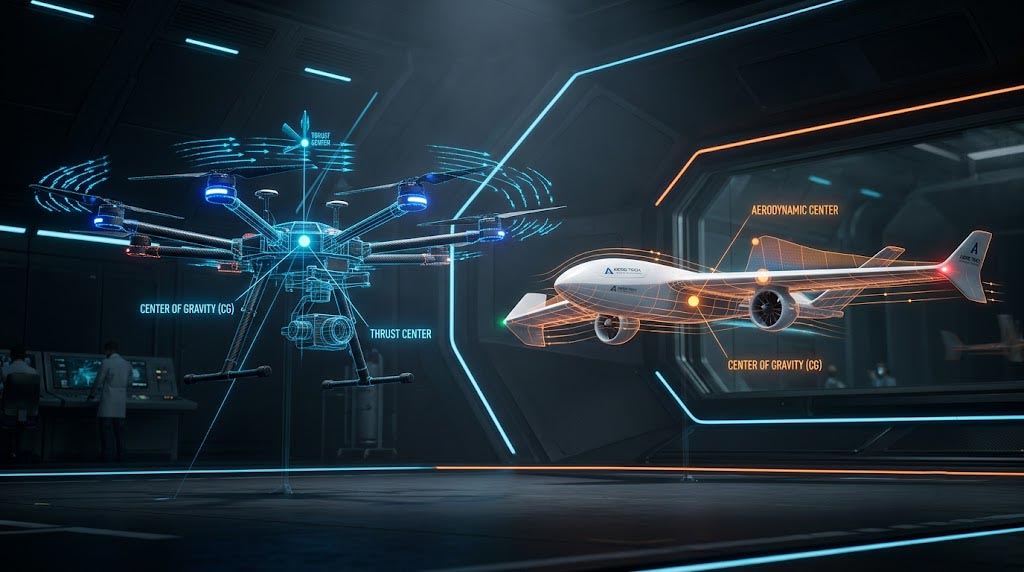
The mechanisms for maintaining stability of multi-rotor and fixed-wing drones are completely different. Multi-rotor relies on the gravity restoration moment generated by the center of gravity and the flight control PID correction. The deviation of the center of gravity will increase the energy consumption of the motor; the fixed wing relies on aerodynamic layout, and the center of gravity must be 5%-15% in front of the focus to achieve static stability. Calculating the center of gravity position before mounting equipment is the basis for ensuring flight quality.

很多飞手在无人机挂载设备后发现续航缩水、操控迟滞,根本原因往往是重心位置发生了改变。多旋翼和固定翼在“如何保持稳定”上,遵循着两条完全不同的物理路径:

一、多旋翼:靠重力把自己拉回来

1. 重心位置:理想重心应位于机体几何中心偏下方,靠近电池或载荷安装位。

2. 稳定机制(重力即稳定器):悬停时不依赖气动面,而是靠重力本身的恢复力矩对抗倾斜。机体倾斜时,重力相对升力中心产生偏距,形成恢复力矩将机体拉回水平(类似不倒翁原理)。

3. 飞控补偿的代价:重心偏移时,飞控PID算法通过调整各电机转速来修正姿态。但修正会带来负面代价:电机加减速频繁导致能耗增加、有效载荷可用推力减少,以及整体操控响应速度下降。

二、固定翼:重心必须在焦点之前

1. 核心变量:焦点(气动力接入点,通常在机翼平均气动弦约25%处)与重心(全机质量中心)。

2. 稳定机制(静稳定裕度):重心必须在焦点之前(通常取弦长的5%-15%),才能实现纵向静稳定。飞机受扰抬头时,焦点处增加的升力会产生低头力矩将机头压回,此过程完全依赖气动力,无需飞控干预。

3. 配平功能:重心前移带来的固定低头力矩,需要通过升降舵向下偏转产生气动力来平衡。静稳定裕度越大,自稳趋势越强,但需要的配平力越大,巡航阻力也越高。

三、核心总结

多旋翼靠重力把自己摆正,飞控兜底;固定翼靠气动布局天然自稳,重心前移即安全。挂载设备之前必须先核算重心偏移量和对静稳定裕度的影响,这是决定飞行品质的底层变量。
Related Articles