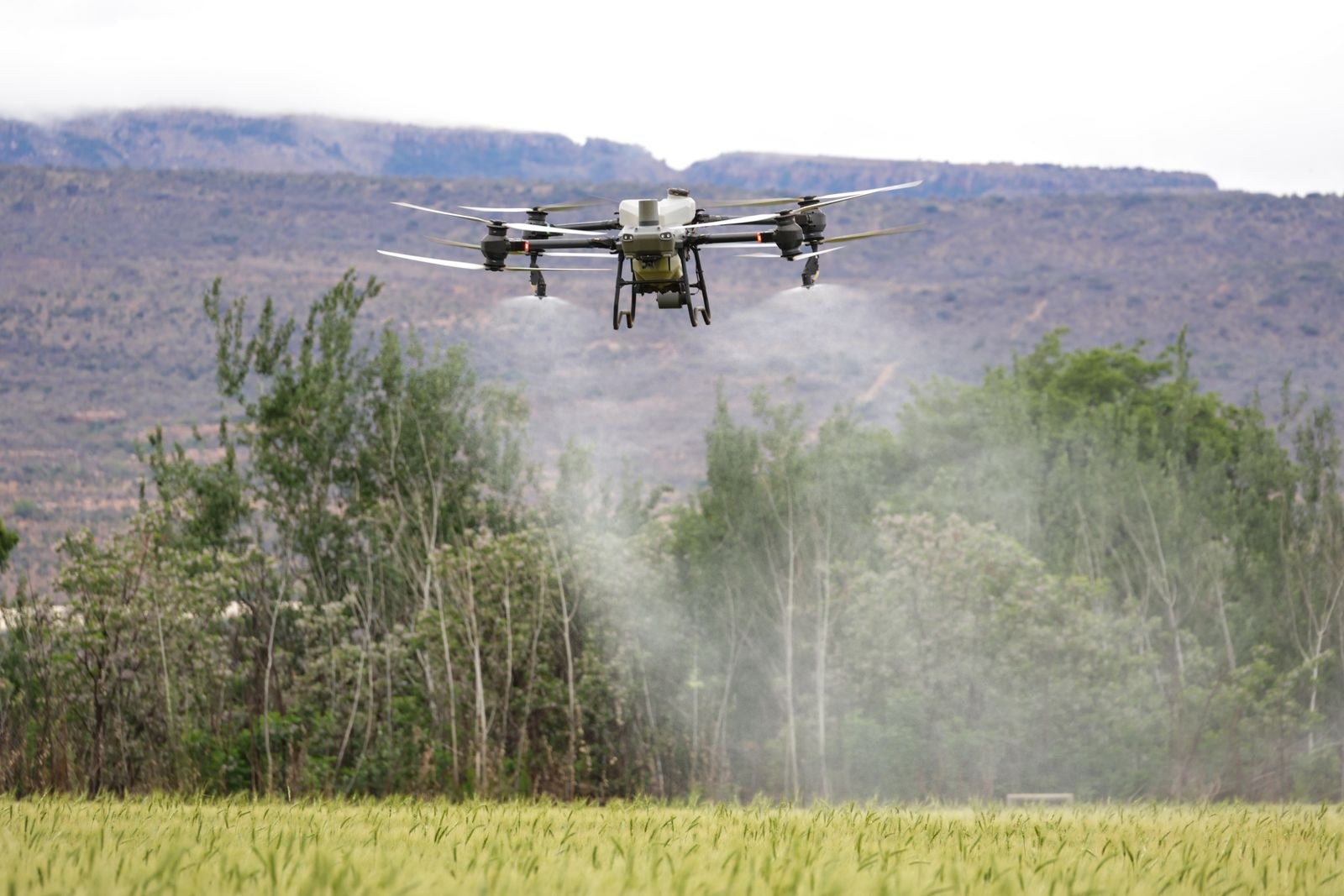
Among buyers of industrial drones, eight out of ten ask the same question: "You advertise 50 minutes, but why does the battery drain so quickly after flying for a while?"
First, the conclusion: Endurance is not stated, it is calculated. For the same aircraft, the gap between the no-load 50 minutes on the spec sheet and the actual flight time in the customer's hands spans four deduction items—battery aging, temperature, wind and maneuvering, landing reserve. Until these four figures are worked out, endurance is merely an unfulfillable claim.
This article does not discuss "how long I flew on site"; it covers only verifiable material: how the spec sheet is written, how current is back-calculated, and how deductions are computed. Every number is sourced—figures from the factory spec sheet and figures from industry experience ranges will be treated separately.
First, the spec sheet: one number, three formulations
In the industry, "endurance" has at least three versions; quotation sheets usually print only the most attractive one:
- No-load endurance: flying with no payload attached. The TS100 spec sheet states 50 minutes.
- Rated-payload endurance: flying with the design payload attached. The same spec sheet states: at 100 kg payload, approximately 10 minutes.
- Mission endurance: flying along the customer's actual mission profile (takeoff, climb, cruise, operations, return) with landing reserve held back. This is the figure the customer can actually rely on.
Comparing the two platforms with clearly stated endurance in the spec sheets, the pattern is obvious: Once payload is applied, flight time drops much harder than expected, and not linearly.
| Platform (per spec sheet) | Unloaded | Rated payload | Multiplier gap |
|---|---|---|---|
| TS100 carrier (100 kg) | 50 min | ~10 min | approximately 5× |
| FY-VT04 VTOL (1.5 kg) | 240 min | 120 min (with 1.5 kg payload) | 2× |
Note on the VT04 row: it is a fixed-wing VTOL that generates lift from its wings, so with a 1.5 kg payload endurance drops only by half; the multi-rotor TS100 drops to one-fifth even at its rated payload. This is a difference in platform type, not a difference in "motor quality."
We did not include endurance for FPV sizes (7/10/13/15 inch) in this table because the spec sheet has no separate endurance row—it varies significantly with battery configuration (1P/2P, capacity)—so forcing a single number would be imprecise.
There is only one endurance formula
Whether multi-rotor or fixed-wing, the essence reduces to a single formula:
flight time ≈ usable capacity (Ah) ÷ average current (A) × 60
"Usable capacity" is not the nameplate capacity, and "average current" is not the full-throttle draw—these two terms are the root of every debate. Recalculate for the TS100 and you see why 50 minutes and 10 minutes are both true:
- Battery: 18S 49000 mAh × 2, combined 98 Ah, nominal voltage ≈ 66.6 V
- Unloaded, 50 min → average current ≈ 117 A (≈ 7.8 kW)
- With a 100 kg load for approx. 10 min → at full conversion based on nominal capacity, approx. 590 A
Important: 590 A is an upper-bound estimate—real flights retain 15–20 % reserve for landing, so usable capacity is less than the full 98 Ah; actual average current sits around 500 A (≈ 33 kW). Either way the conclusion is identical: current rises 4–5× and flight time drops 4–5×. Range is not stolen—it is eaten by current.
This is also why "how many minutes lost per additional kilogram" has no standard answer: it depends on where the mass is placed, what maneuvers are flown, and the ambient temperature. Power scales non-linearly with load—small additions at light weight cost less, while near-maximum payload burns through time rapidly.
Four deduction items, how many have you accounted for?
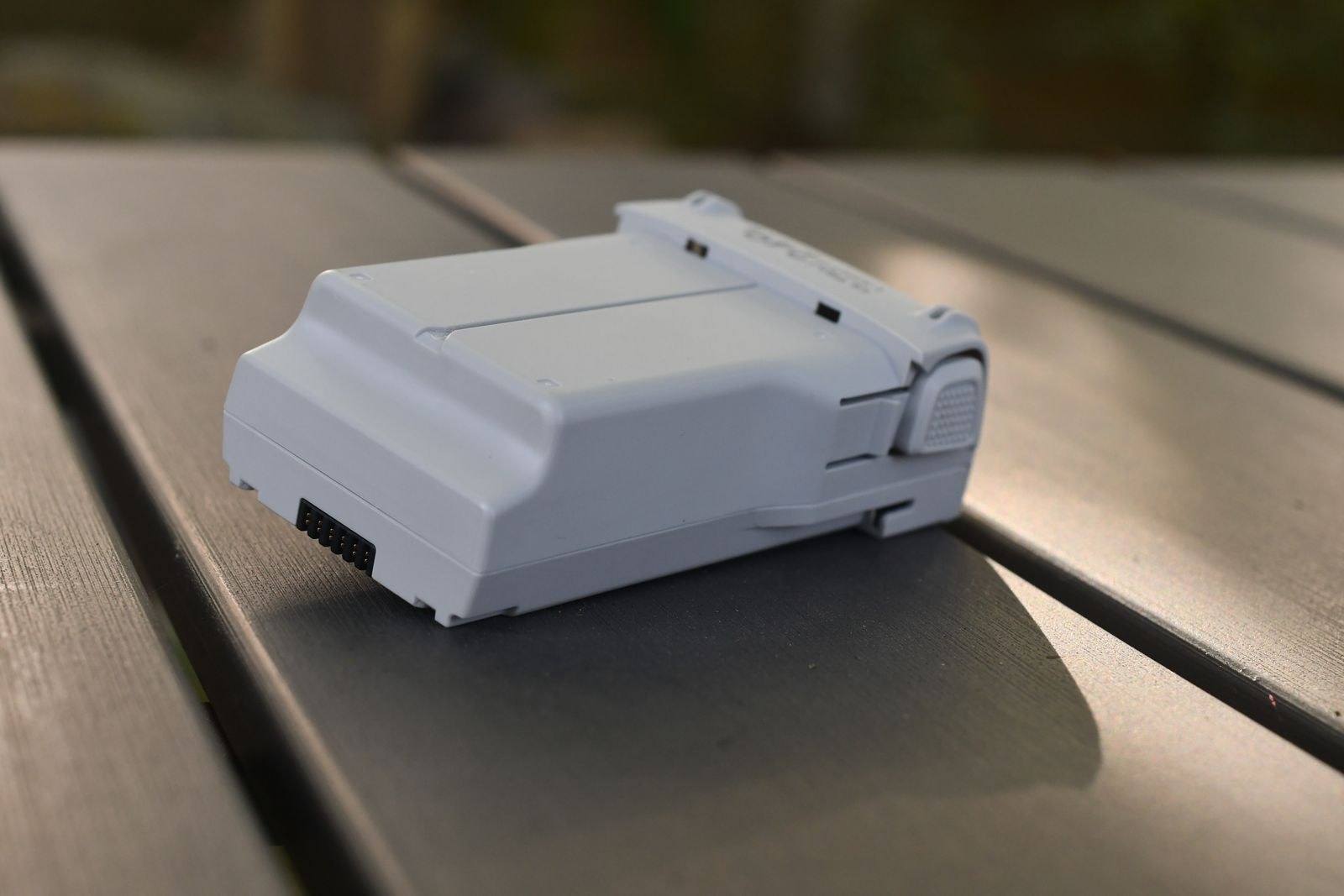
The endurance listed in the parameter table is under standard conditions: good battery condition, 25°C, no wind, steady flight, up to the protection voltage. Real-world missions require another four cuts on top of that.
| Deduction item | Reason for deduction | Magnitude (industry experience, not factory data) |
|---|---|---|
| Battery aging | Capacity degradation and increased internal resistance after lithium-ion cycling; terminal voltage collapses faster in the final stage | 10–25% |
| Temperature | High temperature raises internal resistance; low temperature degrades discharge capability—performance drops at both extremes | 5–20% |
| Wind and maneuverability | Hovering is the most power-efficient; back-and-forth routes, climbing, and wind resistance all require additional power | 10–30% |
| Landing reserve | Recover at 3.5 V/cell; flight end is not determined by flying until depletion | 15–20% |
Estimating the TS100 at the midpoint of the range: full payload 10 min × 0.85 × 0.90 × 0.85 × 0.82 ≈ 5.3 min. In other words, when a customer flies an operational route at 35℃ with 100 kg onboard, what they can reliably get is 5–7 min—not 10 min, and certainly not 50 min.
This is where the title's notion of 'cut in half' comes from: the 10 minutes listed in the spec sheet gets discounted again under real operating conditions. It isn't inflated—simply different measurement criteria; but without knowing those criteria, you'd treat it as a guarantee.
For temperature and altitude, we break it down more precisely in another article (At 50℃ on the job site, how much payload remains?): higher temperatures thin the air, meaning the same lift requires higher RPM; altitude works the same way—above the service ceiling, every additional 1000 m further erodes power margin. So don't ask whether the aircraft can fly at 50℃—ask how many minutes it can still fly at 50℃, and how much payload it can carry.
One more often-overlooked point: battery weight itself eats into endurance. Industry experience shows a battery comprising 25%–35% of takeoff weight is the sweet spot; beyond that share, half of the extra capacity is used simply to carry the extra battery.
Get real endurance data yourself in just three flights
You don't need to wait for the manufacturer's derating table—you can measure numbers close to reality yourself. The method is simple, but reliable:
- Weigh it: weigh the takeoff mass (including battery and payload) on a scale. Reading to ±0.1 kg is sufficient—that error is negligible on a 168 kg aircraft.
- Fly the same flight three times: same route, same altitude, same payload, complete three sorties, and record the takeoff voltage and landing voltage each time.
- Change only one variable: to test payload impact, add payload only; to test wind impact, change the timing only. Changing two variables at once invalidates the data.
- Calculate average current: divide consumed mAh by flight minutes then multiply by 60 to get average current in mA; then divide "usable capacity" by "average current" to estimate flight duration under other payloads.
Average the three sorties and you have your own operating condition table. Compare it with the spec sheet—the gaps and their causes are immediately visible, far more useful than any verbal assurance.
How to report endurance to customers without triggering complaints
Our recommendation: don't report "maximum endurance," report the operating condition table. A three-row table beats any descriptor:
- Empty / half-load / full-load, three levels listed separately
- Each level annotated with test conditions: ambient temperature, wind speed, altitude, landing voltage
- "Additionally: the above figures apply at 25°C, no wind, stable flight; for route operations, apply an 80% factor."
With this disclaimer, when a customer's first flight delivers only 80% of the table value, they won't feel misled because they know where the gap comes from. On endurance, the costliest thing is not shorter flight time but empty promises.
Which sentence belongs in the procurement document
If you are the buyer, one additional line in the tender or inquiry form is sufficient:
Please provide the endurance under rated payload, and state the ambient temperature, wind speed, altitude, and landing voltage at which the test was performed.
Suppliers who can answer have genuinely run the test; those who cannot tell you exactly how to negotiate the price.
Frequently Asked Questions (FAQ)
Why can't I achieve the endurance stated by the manufacturer?Because the rated value is typically given under standard conditions (25°C, no wind, steady-level flight, until battery depletion); you are flying a fully loaded, high-temperature, windy route with repeated take-offs and landings. A 40%–60% difference between the two is normal and does not indicate a fault.
How much does flight time decrease per 1 kg of added payload?There is no fixed value. Power rises with weight and current follows, so runtime drops slowly in the light-payload range and faster as you approach full load. The only way to get an accurate answer is to run a weighing plus timing test on your actual mission route.
When should the battery be replaced?Two signals: when the same route's endurance drops more than 20% compared to a new battery; or when a single cell's internal resistance doubles that of a new battery. Note that the internal-resistance threshold depends on capacity—a 1500 mAh small cell at 20 mΩ is already considered aged, while a 49000 mAh large pack has a naturally lower absolute value, so don't apply the small-cell standard to the large pack.
Conclusion
One-line rule of thumb: capacity divided by current, then cut it by four.Anyone who quotes only a "maximum endurance" figure is betting you won't do this calculation yourself.
Next time you request a quote, include this line in your email: "Please provide full-load endurance and note ambient temperature, wind, altitude, and landing voltage."A single operating-conditions table saves six months of back-and-forth later.
Source of figures in this article: endurance, battery, and weight data for the TS100 and FY-VT04 come from factory parameter sheets; the four deduction ranges are industry experience. Actual values per model are subject to pre-delivery flight-test measurement.