Why Autonomous Drone Patrols Outperform Human Guards for Perimeter Security — A Cost Analysis
The Real Cost of Guard-Based Perimeter Security
When facility managers evaluate perimeter security options, the first number that comes to mind is usually the hourly rate of a security guard. But that figure tells only part of the story. The true cost of guard-based perimeter protection extends far beyond wages — it encompasses recruitment, training, turnover, equipment, insurance, management overhead, and the hidden costs of missed threats.
A typical four-guard shift at a medium-sized industrial facility — the minimum configuration for 24/7 coverage with standard rotation and break schedules — carries a fully loaded annual cost of $180,000 to $280,000 per site. This includes base wages, benefits, workers' compensation insurance, uniform and equipment provision, background check renewals, and administrative time spent on scheduling and payroll management. At a single facility, this translates to approximately $720,000 to $1.1 million annually for four complete shifts.
For multi-site operators — energy companies with substations spread across a region, logistics firms with distribution centers in multiple cities, or manufacturing groups with production sites in different jurisdictions — these costs multiply rapidly. A regional energy operator with twelve substations may employ over 200 security personnel, carrying an annual security labor budget exceeding $10 million.
The Hidden Costs of Human Limitations
Beyond the direct financial figures, guard-based security carries significant operational costs that are rarely quantified in budget documents:
False alarm response costs. Ground sensor systems generate false positives at rates of 70% to 95%. Each false alarm triggers a guard response — travel time, physical investigation, report filing. Multiply this across thousands of false alarms per year at a single site, and the wasted labor hours become substantial. Industry estimates place the average guard response time for a false alarm at 8 to 15 minutes, meaning a four-guard shift wastes approximately 32 to 60 guard-minutes per day on non-threats.
Fatigue-related vulnerability. Human vigilance degrades measurably after eight hours of continuous duty. Night shifts show particularly steep declines in detection accuracy. Security incidents occurring during late-night hours are disproportionately likely to involve guards who have been on duty for more than ten hours — a condition that increases the probability of missed detections by an estimated 40% to 60%.
Weather-related coverage gaps. Extreme heat, cold, heavy rain, and fog reduce both guard effectiveness and willingness to conduct outdoor foot patrols. Facilities often reduce outdoor patrol frequency during adverse weather, creating predictable windows of vulnerability precisely when intruders may exploit.
Turnover and training costs. The security industry experiences annual turnover rates of 35% to 45%, requiring continuous recruitment and onboarding. Each new guard requires 40 to 80 hours of site-specific training before achieving full operational competence. During this training period, the new guard contributes less to overall security effectiveness while simultaneously consuming supervisory resources.
Autonomous Drone Patrol: The Economic Alternative
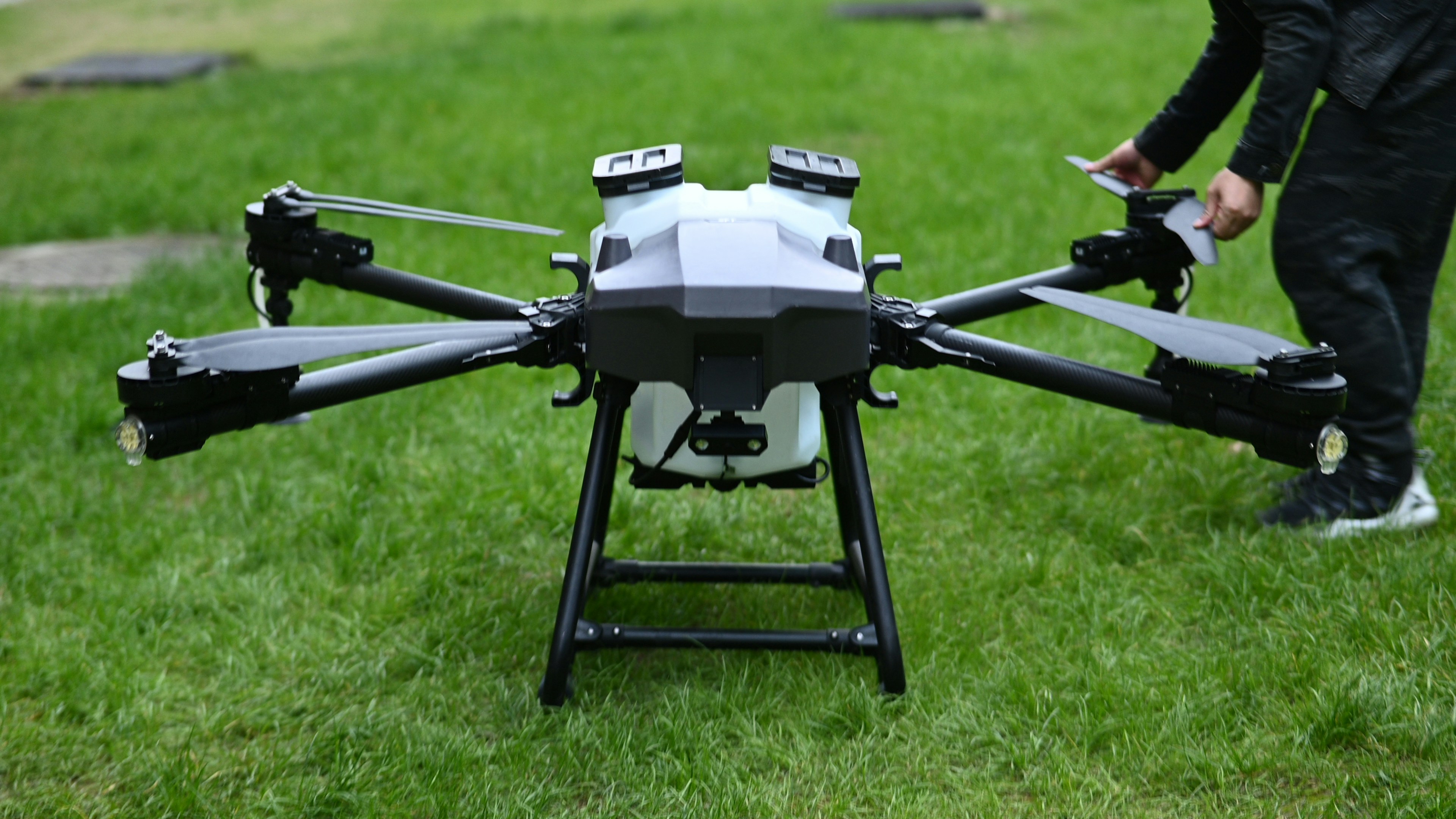
Autonomous drone patrol systems using dock-based infrastructure like the DJI Dock 3 and managed through DJI FlightHub 2 present a fundamentally different cost structure. The capital expenditure for a complete dock-and-drone package typically ranges from $30,000 to $60,000 per site, depending on terrain and coverage requirements. Annual operating costs — primarily electricity, periodic maintenance, and cloud platform subscription — run approximately $5,000 to $10,000 per site.
For a twelve-site regional operator, the total deployment cost would be approximately $360,000 to $720,000 in capital equipment plus $60,000 to $120,000 in annual operating expenses. Compared to the $10+ million annual guard labor budget, the drone patrol system delivers a recurring cost reduction of 98% or more.
But cost savings alone do not capture the full value proposition. The economic argument strengthens when factoring in improved detection rates, faster response times, and the operational flexibility that autonomous systems provide.
Coverage Quality Comparison
| Metric | Human Guards | Autonomous Drone Patrol |
|---|---|---|
| Operating hours | Limited by fatigue (8-10 hr shifts) | Continuous (autonomous dock cycling) |
| Weather resilience | Significantly degraded in adverse conditions | IP55-rated dock operates in rain and wind |
| Thermal detection | None (visible-light only) | Radiometric thermal camera, 800m range |
| Response to alert | 8-15 minutes average | Under 3 minutes from docked position |
| Documentation | Manual log entries, subjective | Automatic video and telemetry archival |
| Multi-site scalability | Linear cost increase per site | Single console manages all sites |
| False alarm rate | High (guards respond to all alerts) | AI-assisted verification before dispatch |
Total Cost of Ownership: Five-Year Projection
For a facility with a 50-hectare perimeter, a five-year total cost of ownership comparison reveals the economic advantage clearly:
Guard-based security (four shifts, 24/7): $4.8 million to $7.2 million in labor costs, plus approximately $300,000 in equipment, training, and management overhead. Total: $5.1 to $7.5 million.
Autonomous drone patrol (three dock stations covering the perimeter): $90,000 to $180,000 in capital equipment, plus $25,000 to $50,000 in annual operating costs ($125,000 to $250,000 over five years). Total: $215,000 to $430,000.
The five-year savings from deploying autonomous drone patrols range from $4.7 to $7.1 million for a single medium-sized facility. For multi-site operators, the cumulative savings across a twelve-site portfolio exceed $50 million over the same period.
Operational Flexibility: Beyond Cost Savings
The economic advantage of drone patrols is compelling, but the operational benefits amplify the return on investment. Autonomous systems can be reconfigured remotely — patrol routes adjusted, coverage density increased at newly identified vulnerable points, and response protocols modified in response to changing threat levels — without the recruitment delays and training timelines associated with expanding guard staffs.
During elevated threat periods, drone patrol intensity can be increased from nightly scheduled patrols to hourly intervals within hours. Achieving the same effect with human guards requires overtime authorization, additional shift staffing, and potentially temporary agency contracts — processes that take days or weeks to execute.
Conclusion
The economics of perimeter security are shifting decisively in favor of autonomous drone patrols. The combination of dramatically lower total cost of ownership, superior coverage quality, faster response times, and greater operational flexibility makes dock-based autonomous surveillance the rational choice for critical infrastructure operators who take both budget and security seriously.
If you are managing perimeter security across one or multiple facilities and want a detailed cost comparison specific to your site profile, contact our team for a customized analysis.